A Timepiece of Deliberate Discretion: Jaeger LeCoultre Calibre 101 Secrets
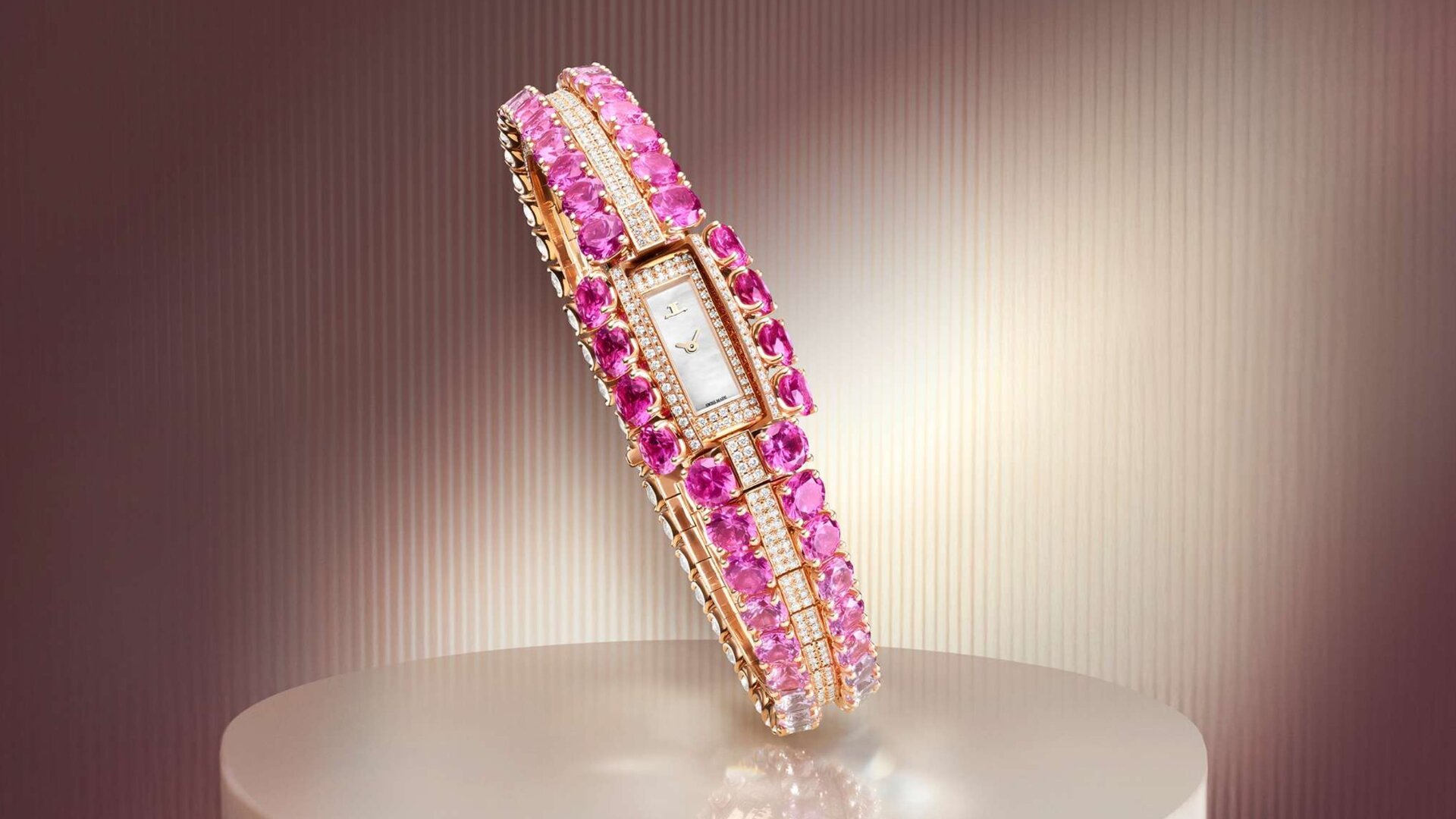

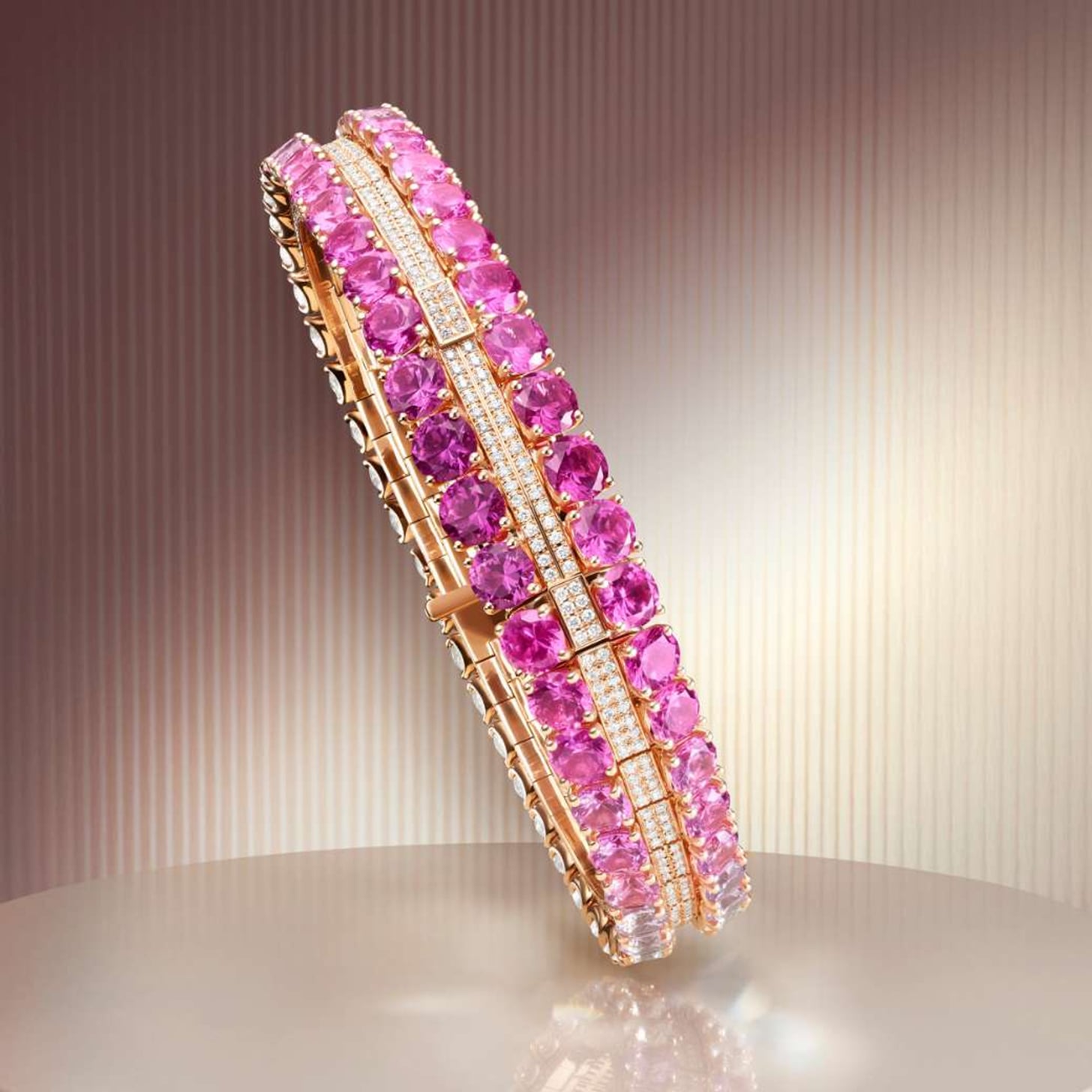
Even at the closest glance, Jaeger‑LeCoultre’s Calibre 101 Secrets reveals no hint of a dial concealed within. Pink gold links and graduated sapphires encircle the wrist in an unbroken flow, with no clasp, hinge or seam, betraying the mechanism beneath. The bracelet is composed as a double rivière with two parallel rows of stones running its full length, articulated to move naturally with the body instead of resting rigidly against it. Hidden along this line lies a single, secret point, known only to its wearer, which releases a section that opens like a book to reveal a dial, vanishing again the moment the finger lifts. Limited to three pieces, the watch continues a lineage Jaeger‑LeCoultre has upheld since 1929.
A heritage of women concealing the time
The concealment is a deliberate choice that draws its purpose from a heritage. Secret watches once let women carry a timepiece that read, to any room, as pure jewellery, its function surfacing only in private. The Calibre 101 Secrets restages that idea with considerably more ambition than the tradition usually allowed.
The bracelet's 124 pink sapphires total 16.39 carats and move through seven distinct gradations, from a saturated cyclamen at one end to a shade so faint it barely registers as colour. The gem setter worked in griffe and grain techniques, griffe chosen because it secures each stone with minimal metal, allowing light to travel through the sapphire rather than being interrupted at its edge. Between the two rows of stones runs a band of grain-set diamonds, echoed around the bezel once the dial is exposed, where 904 diamonds add a further 13.26 carats. Setting the stones alone takes 163 hours per bracelet.
Powering the dial itself is the Calibre 101, a movement developed by the Manufacture in 1929 on the two-level Duoplan architecture patented four years earlier. It remains, even now, the smallest manual mechanical movement ever produced, built from 98 components and weighing under a gram, roughly the equivalent of two butterflies. Assembling it takes 40 hours by hand. Fitted into a case just 3.4mm thick, it runs at 21,600 vibrations per hour across 19 jewels and offers 33 hours of power reserve, figures that would be unremarkable in a far larger movement and border on implausible in one this small.
The result is a timepiece that asks to be acknowledged as jewellery until the one detail that contradicts that reading is deliberately, briefly shown.
Image Credits - Jaeger LeCoultre


.png)