Roger Dubuis Explores the Mechanics of Time at Watches and Wonders 2026
.png)

At Watches and Wonders Geneva 2026, Roger Dubuis returns to a question that predates the wristwatch: how to make time observable, and then how to make it consistent. The sky offered the first answer, through cycles that repeat but never quite align. Mechanical watchmaking refines that inconsistency into precision with perpetual calendars, tourbillons, retrograde displays. Across this year’s novelties, that process has been made explicit.
Alongside this, a separate line of enquiry unfolds. Drawing on Arthurian legend, a series of Métiers d’Art pieces translates the Lady of the Lake and the forest of Brocéliande into material terms—mother-of-pearl, enamel, engraved gold. The emphasis shifts from indication to surface, but the discipline remains the same. GMT India reviews the novelties in detail.
Excalibur Biretrograde Perpetual Calendar
A familiar complication is reworked through new movement architecture. The Excalibur Biretrograde Perpetual Calendar is driven by the RD850 calibre, a new-generation automatic movement carrying the Poinçon de Genève. It is housed in a 40mm 18K pink gold case with an open caseback and paired with a matching triple-folding clasp with quick-release.
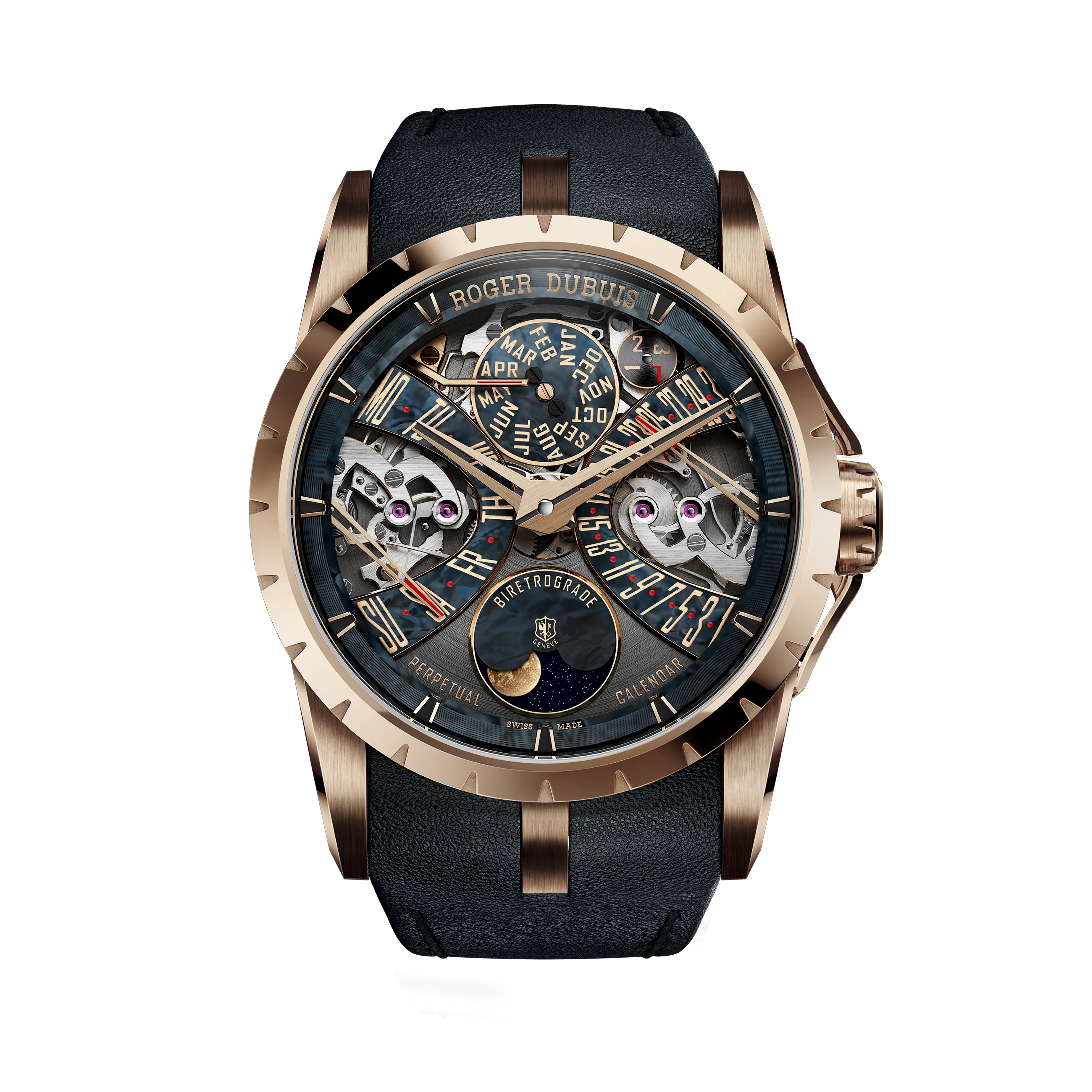
The dial unfolds across nine layers, from a varnished mother‑of‑pearl base through applied pink gold elements and a flange with PVD and satin finishes, culminating in a blue aventurine moonphase disc engraved with pink gold moons. Day and date are indicated via biretrograde hands, a system closely tied to Roger Dubuis since its co-patenting in 1989. The astronomical moonphase is calibrated to a 122-year cycle, extending the watch’s scope beyond the annual logic of the calendar.
Excalibur Biretrograde Calendar
Here, the complication is reduced to its essential function. The Excalibur Biretrograde Calendar is housed in a 40mm stainless steel case with an open caseback and a matching steel triple-folding clasp with quick-release. Inside, the automatic RD840 calibre integrates the biretrograde module directly into the movement, rather than layering it on top.
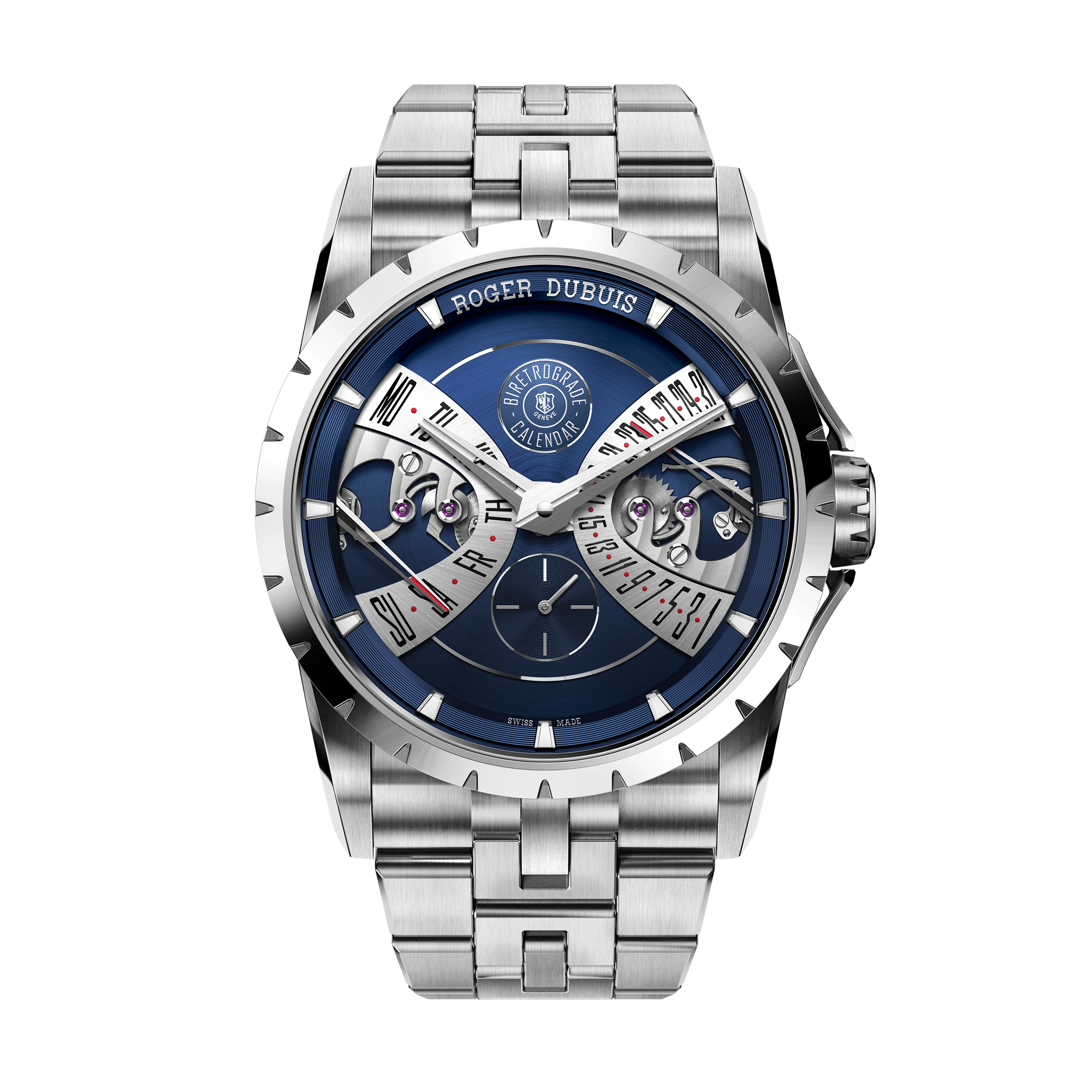
The dial, rendered in Cosmic Blue, moves from an azuré-finished outer flange to a sun-brushed centre plate, creating depth without compromising legibility. Biretrograde hands trace the day and date across twin arcs with immediacy. Fourteen hand-applied finishing techniques meet the requirements of the Geneva Seal, visible through the open-worked architecture.
Excalibur Moonlight
Developed as a unique piece within the Rarities programme, the Excalibur Moonlight places the regulating organ at the centre of the composition. The 45mm case is crafted in titanium with a black DLC treatment, paired with a calf leather strap and a triple-folding clasp in DLC-treated titanium.
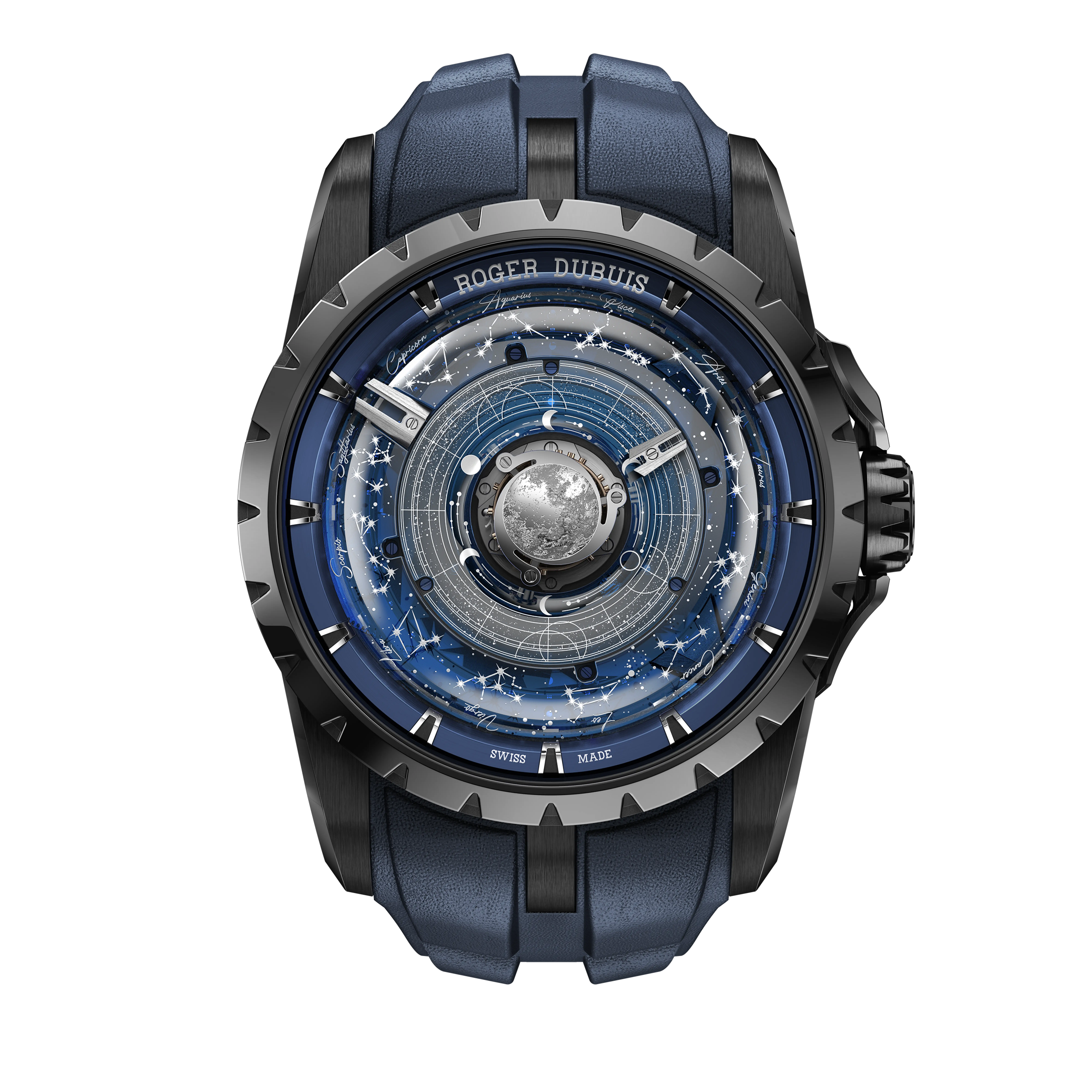
The dial is constructed in layers: a satin-brushed blue flange with rhodium-coated indices frames enamel discs for hours and minutes, decorated with hand-painted luminous zodiac constellations and moon phases. At the centre, a hand-engraved brass tourbillon cage anchors the display. The layout prioritises rotation and alignment, with the tourbillon functioning as both regulator and focal point.
Excalibur Perpetual Calendar Quatuor
The Quatuor system—four sprung balances working simultaneously—is paired here with a perpetual calendar for the first time. The watch is housed in a 48mm cobalt chrome case with an open caseback, fitted to a blue calf leather strap and a titanium triple-folding clasp with quick-release.

The dial is arranged across defined layers: a double-surface satin-brushed flange with transferred text and minute track, followed by sapphire calendar segments with metallisation, and finally day, date, and month discs, also in metallised sapphire. Beneath, the four-balance system operates continuously to average out positional variation, while the perpetual calendar tracks longer cycles. The structure is explicit, each component occupying a distinct plane within the case.
Excalibur Lady of the Lake
In a 36mm 18K pink gold case, set with diamonds on the bezel and fitted with a black alligator strap, the Lady of the Lake shifts the focus to surface and material. The dial combines a silver-coated flange with azuré and opaline finishes, set against a sun-brushed plate with a mother-of-pearl centre.
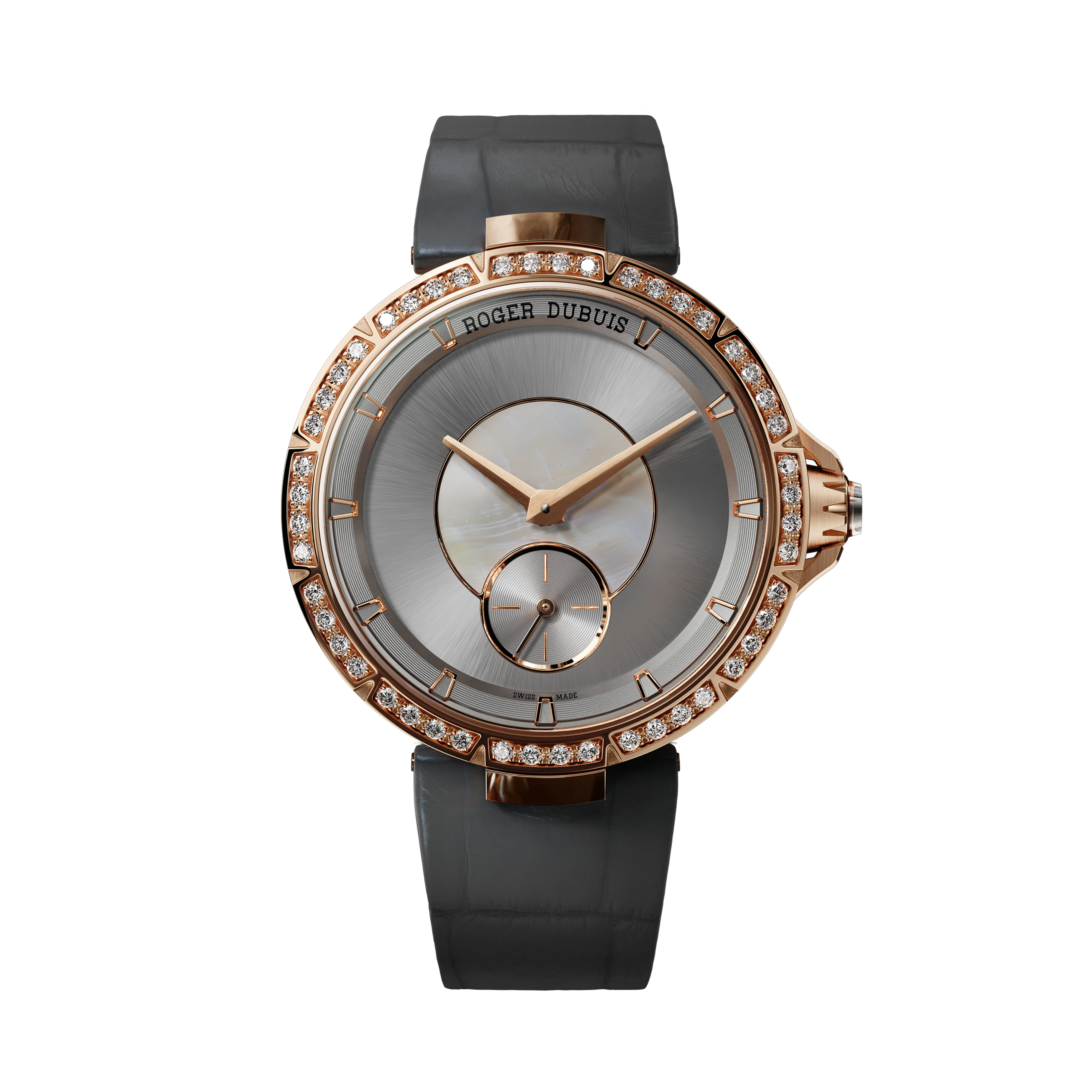
A second interpretation introduces a more complex construction: a 36mm pink gold case set with 56 diamonds, paired with a green alligator strap. Here, the dial features three-dimensional mother-of-pearl marquetry, assembled in wave-like segments. A moonstone cabochon marks the seconds. The flange carries CVD coating with azuré and opaline finishes, while polished pink gold-plated hour markers sit against the textured surface.

Excalibur Brocéliande
The Brocéliande models extend this approach into a more open construction. Both versions are housed in 38mm pink gold cases with open casebacks and alligator straps—blue for Twilight Blue, raspberry pink for Dawn Rose, the latter with a diamond-set bezel.
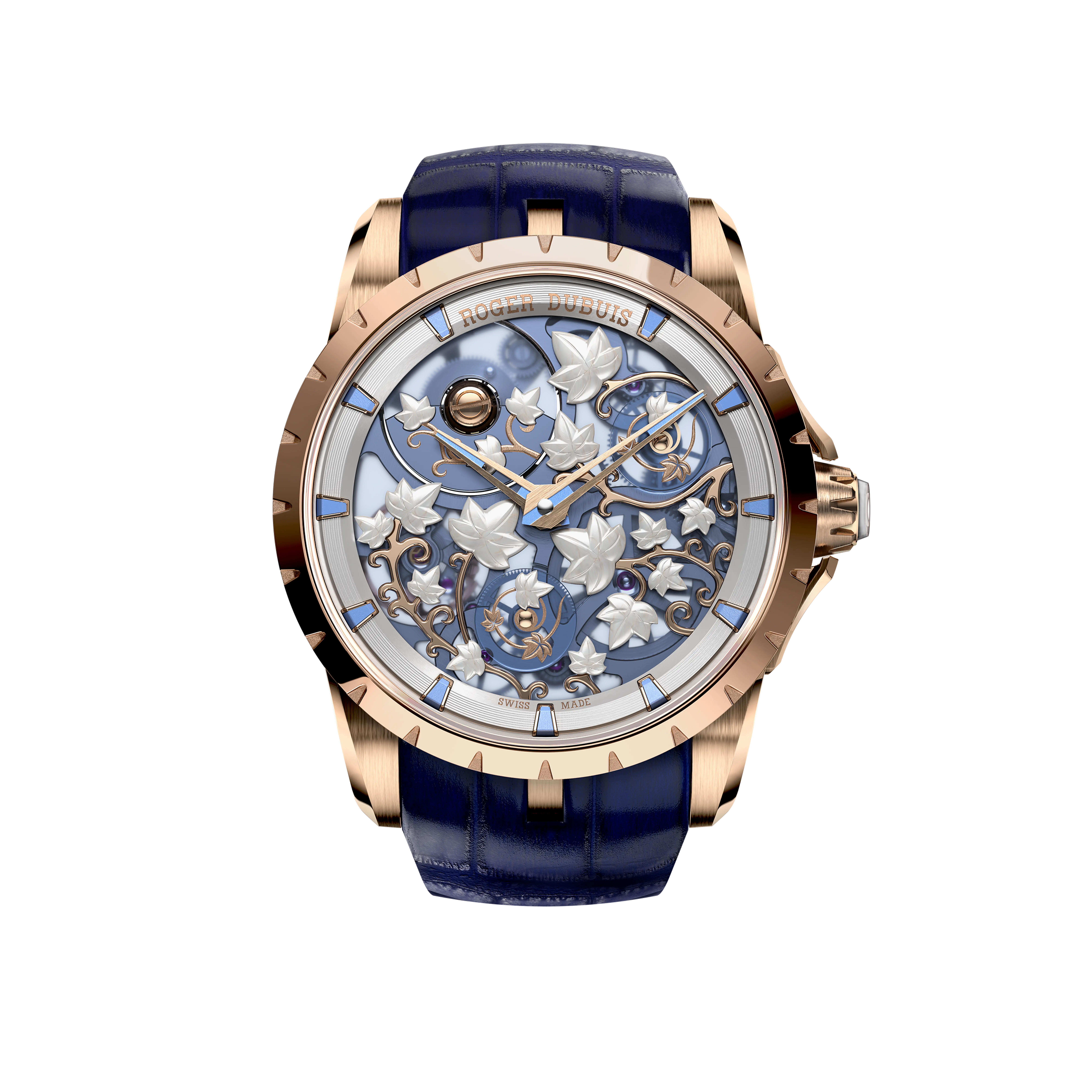
The dial is built on a sapphire base, with pink gold branches and lacquered mother-of-pearl leaves forming the upper structure. Two rotating sapphire discs at 2 and 7 o’clock introduce motion across the surface, shifting the composition over time. Beneath, the RD721SQ automatic skeleton calibre is visible, finished to Poinçon de Genève standards. Across both versions, the flange features polished gold-plated hour markers with Super-LumiNova, while the dial construction integrates micro-rotor decoration within the broader visual field.
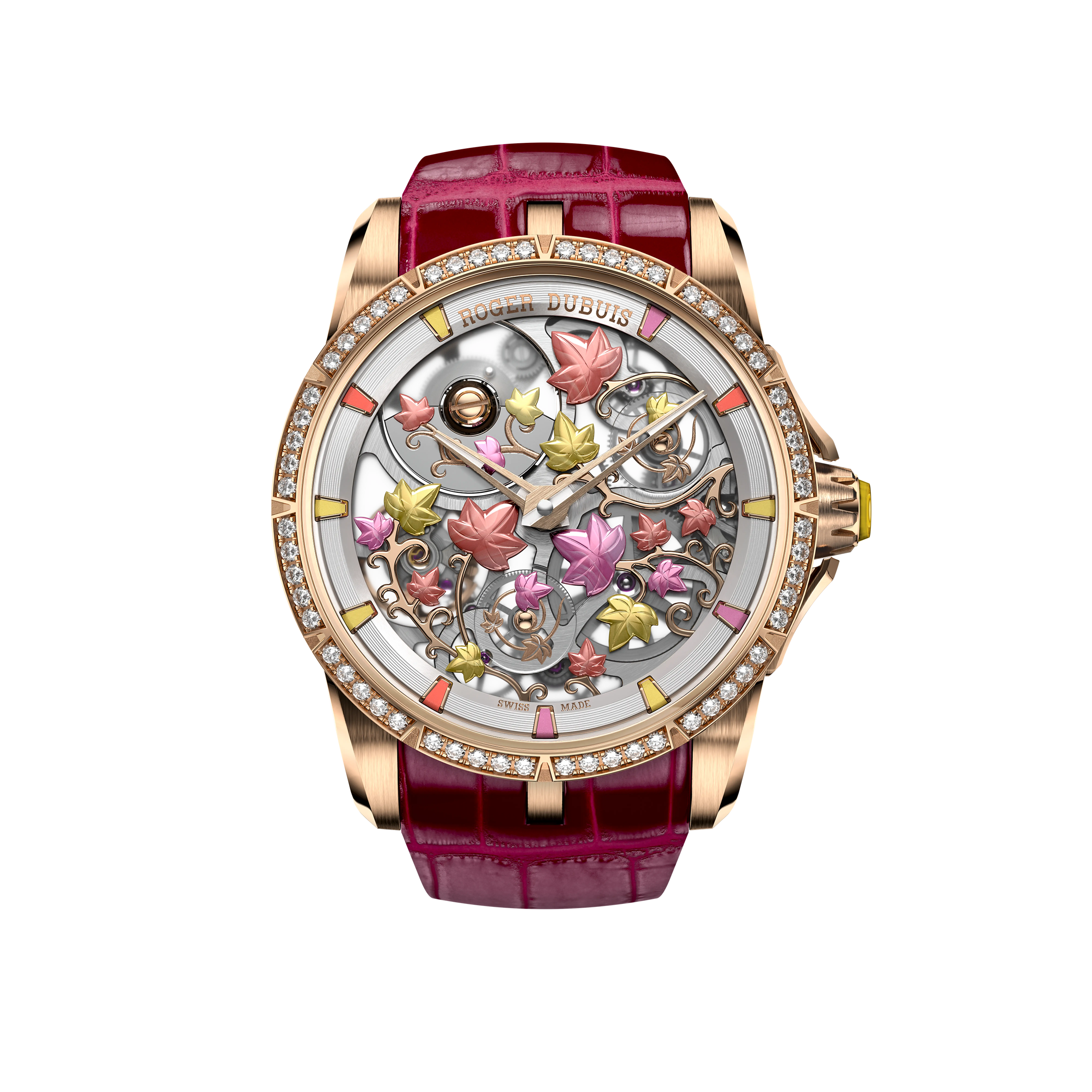
Image credits: Respective brands