Breguet Celebrates 225 Years of the Tourbillon with the Sidéral 7255 Limited Edition
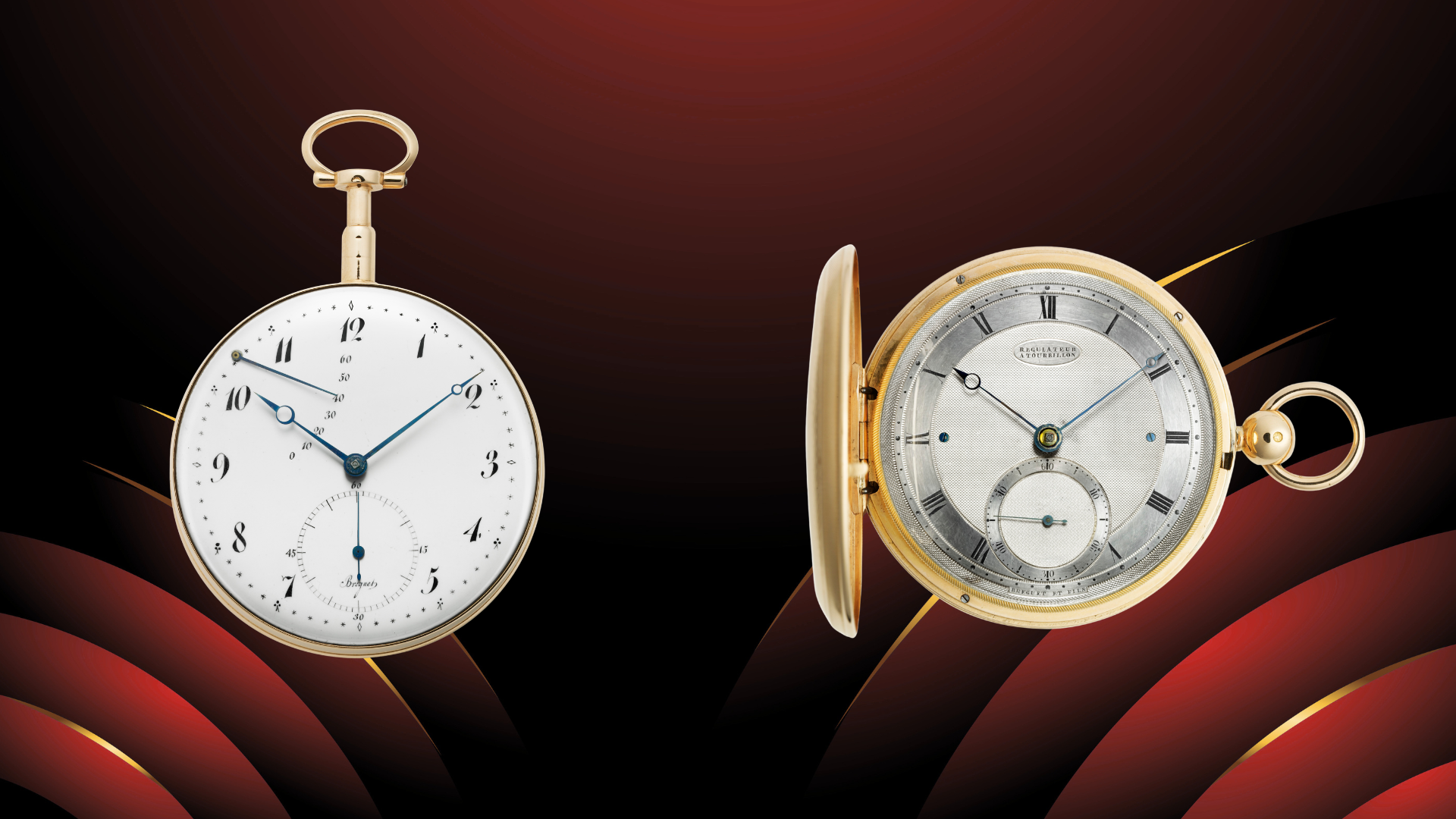

On June 26, 1801, Abraham-Louis Breguet secured a patent for an invention that would forever alter the course of watchmaking. More than two centuries later, the tourbillon remains one of horology's most celebrated achievements — a mechanical marvel that continues to inspire watchmakers and captivate collectors around the world.
To mark the 225th anniversary of this milestone, Breguet has unveiled the Classique Tourbillon Sidéral 7255, the fourth chapter in its 250th anniversary celebrations. Limited to just 50 pieces, the watch is far more than a commemorative edition. It is a contemporary interpretation of Breguet's most celebrated invention, combining a flying tourbillon with a mysterious mechanism for the very first time in the Manufacture's history.
Inside Breguet's Tourbillon Legacy
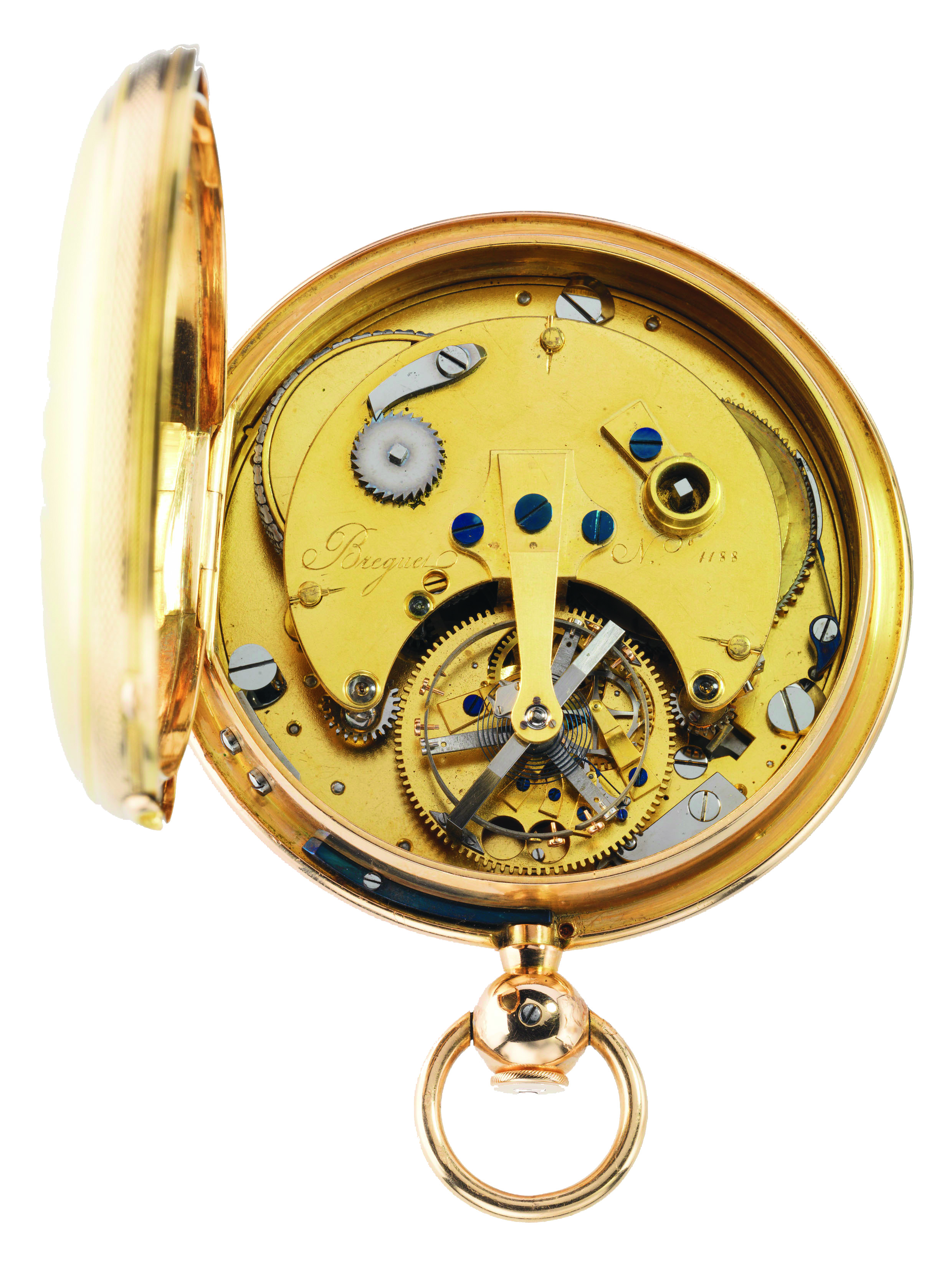
The story begins in the late 18th century. Most pocket watches of the era spent their lives upright in waistcoat pockets, leaving their regulating organs constantly exposed to the effects of gravity and compromising accuracy over time. Breguet's solution was brilliantly simple yet extraordinarily complex to execute. He placed the regulating organ inside a rotating cage. By continuously turning, the cage averaged out positional errors caused by gravity, improving accuracy over time.
The invention was named "tourbillon", a French word commonly associated with a whirlwind or rapidly rotating motion. Its roots, however, extend beyond watchmaking. By the 17th century, philosophers and mathematicians used the term to describe systems animated by rotational movement, including celestial bodies and planetary systems. It is a fitting connection, considering that the tourbillon itself is a miniature mechanical universe in constant motion.
What makes Breguet's original achievement remarkable is that it was conceived as a principle rather than a finished solution. Abraham-Louis Breguet continuously experimented with different cage constructions, rotation speeds, and escapement systems throughout his life. He understood that innovation was never static.
A Floating Marvel of Precision
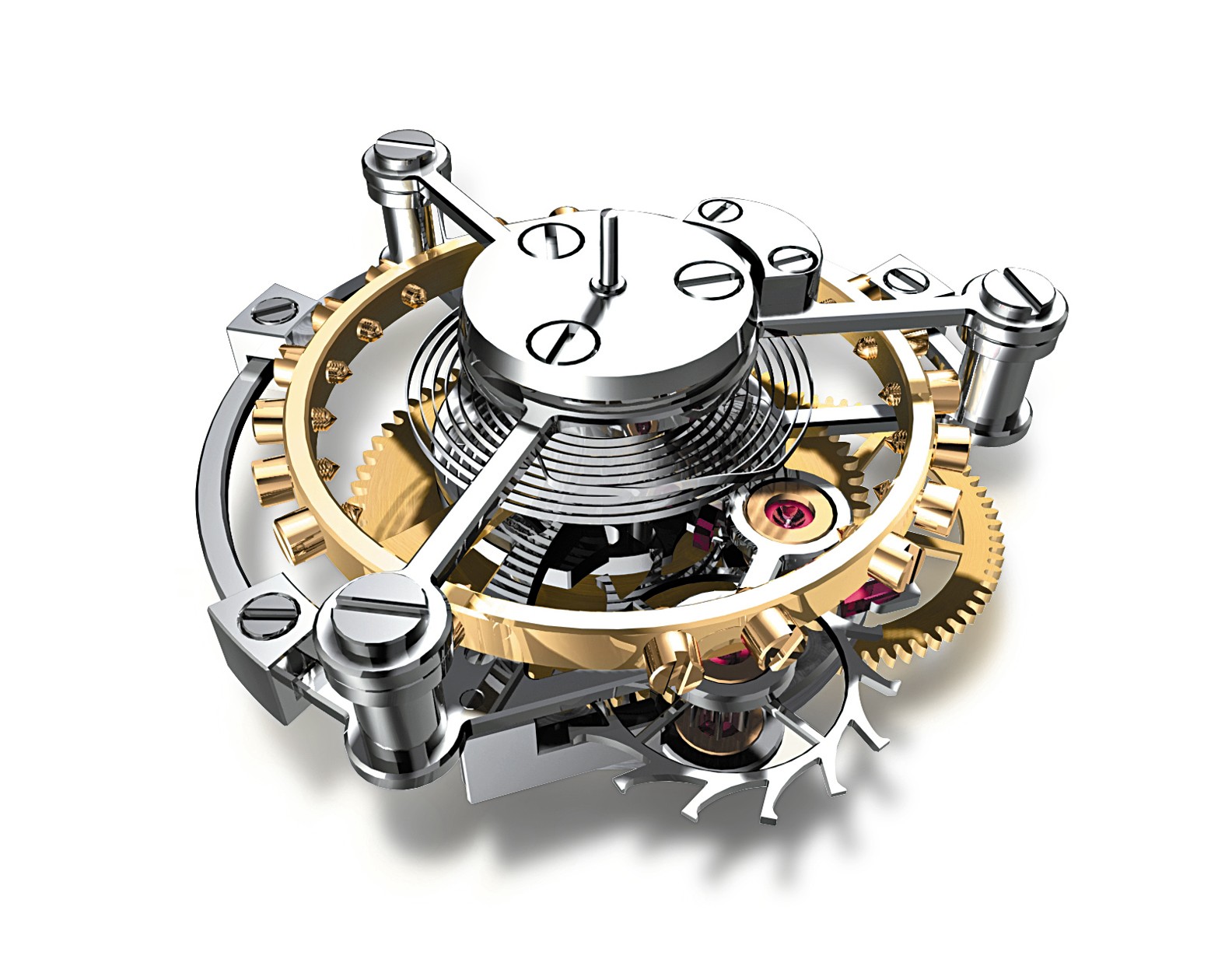
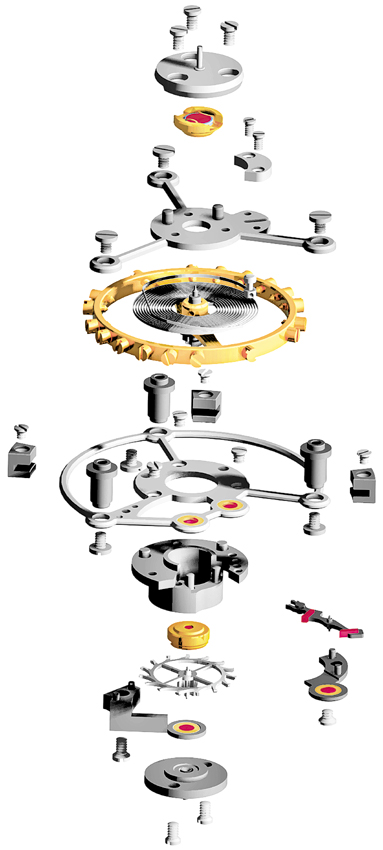
The Classique Tourbillon Sidéral 7255 follows that same philosophy. For the first time, Breguet presents a flying tourbillon. While the traditional purpose remains unchanged, to counter the effects of gravity, the construction differs dramatically. In a conventional tourbillon, the rotating cage is supported from both above and below. A flying tourbillon eliminates the upper bridge entirely, supporting the cage only from beneath.
The result is visually spectacular. Freed from its upper support, the mechanism appears suspended in space. Yet achieving this effect is technically demanding. Without the stability provided by an upper pivot, the cage must be perfectly balanced, exceptionally rigid, and meticulously adjusted. Every component becomes more critical.
Breguet has amplified this illusion further by incorporating a mysterious mechanism. Traditionally found in clocks where hands appear to move without visible connections, the mysterious complication conceals the driving elements that power a rotating component. Here, the lower support and bridge of the tourbillon are crafted from anti-reflective sapphire. The point where the gears engage with the tourbillon carriage is hidden beneath the dial. To the naked eye, the entire regulator seems to float effortlessly, rotating without any visible source of energy. The effect is mesmerising.
Astronomical Aesthetics
The watch's name offers another clue to its inspiration. "Sidéral" refers to sidereal time, a method of measuring time based on the fixed positions of stars rather than the Sun. It is a concept deeply rooted in astronomy, a field that profoundly influenced Abraham-Louis Breguet. Educated at Paris' Collège Mazarin under renowned mathematicians, Breguet cultivated lifelong relationships with astronomers and scientists, eventually becoming a member of both the Académie des Sciences and the Bureau des Longitudes.
His fascination with the heavens is reflected in the dial. For the first time, Breguet has employed aventurine enamel on a watch dial. Its deep blue surface, flecked with shimmering copper inclusions, evokes a star-filled night sky. Producing it is an art form in itself. The aventurine glass is ground into powder and fired repeatedly at temperatures exceeding 800 degrees Celsius. At least five separate layers are required, and each firing carries risk. A slight deviation in temperature or timing can compromise the entire dial.
The reward is extraordinary. The richness of grand feu enamel combines with the unpredictable sparkle of aventurine, creating a celestial canvas unlike any other. Because every dial is handcrafted, no two examples are exactly alike, making each of the 50 pieces unique.
Tribute to Astronomy
As Gregory Kissling, CEO of Breguet, notes: "Invented by Abraham-Louis Breguet in 1801, the tourbillon remains one of the most complex complications in watchmaking. Its mastery embodies the technical excellence to which the House of Breguet has remained faithful for more than two centuries." That faithfulness is evident throughout the Classique Tourbillon Sidéral 7255.
Yet this watch is not simply about preserving history. It demonstrates how an invention conceived over 225 years ago can still inspire new interpretations. The tourbillon has evolved countless times since 1801. It has become faster, lighter, multi-axis, and increasingly sophisticated. Yet its underlying principle remains unchanged. In an industry driven by constant innovation, few inventions can claim such longevity.
Image credits: Breguet