Famous by Accident: How Le Mans Turned the TAG Heuer Monaco into a Collector’s Choice


The Heuer Monaco was not designed to become famous. It was a deliberate answer to a technical constraint, sold modestly, then dropped from the catalogue. Its reputation came later, from a film set, a racing driver’s friendship and a choice of watch that three accounts describe in three different ways. This is how an awkward square chronograph became a fixture of collecting, and why it is now being presented to a new market in India.
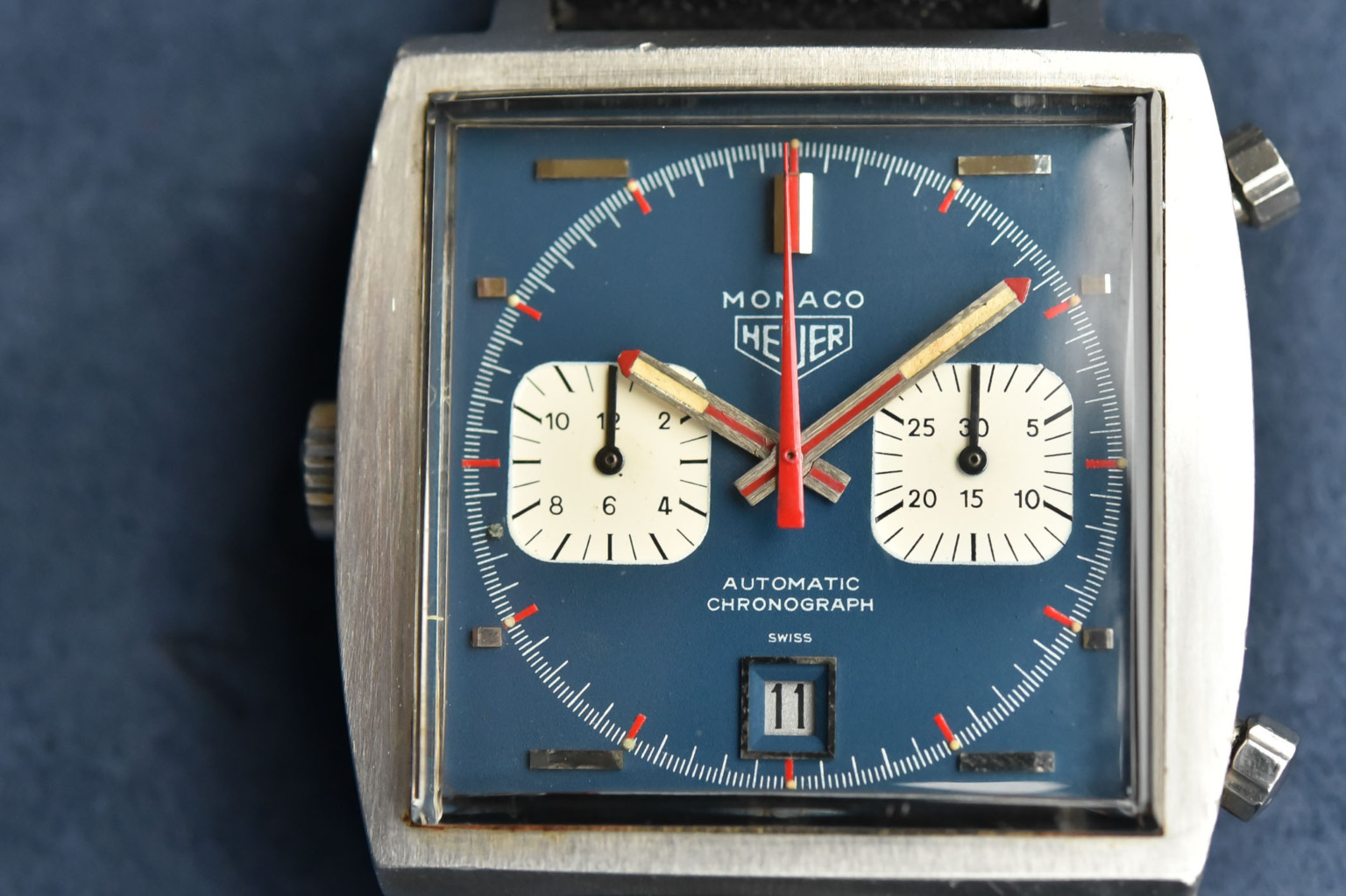
Let’s begin at Le Mans in the summer of 1970. On a film set, a square dial in petrol blue sits on Steve McQueen’s wrist. The case is tall and angular, and the crown is on the wrong side. Within a few years, the watch would leave Heuer’s regular catalogue. So, how did it enter film history in the first place?
A Movement that Demanded a New Shape
The story starts inside the movement. Heuer joined a consortium of four firms under the codename Project 99 to build an automatic chronograph, with a launch date fixed for March 3, 1969. Heuer and Breitling contributed chronograph expertise, Hamilton-Buren a thin automatic base and Dubois-Depraz the chronograph module.
The resulting Calibre 11 was thick, and its layout put the crown on the left. Jack Heuer decided to present that oddity as a feature: a sign that the watch wound itself. The movement also went into the Carrera and Autavia, but Heuer wanted a third, more adventurous form. Square sports watches had been impractical until his supplier Piquerez solved the water resistance problem, and Heuer quickly secured exclusive use of the design. A movement that could not be discreet received a case that made no attempt to be.
The Driver Who Wore a Different Watch
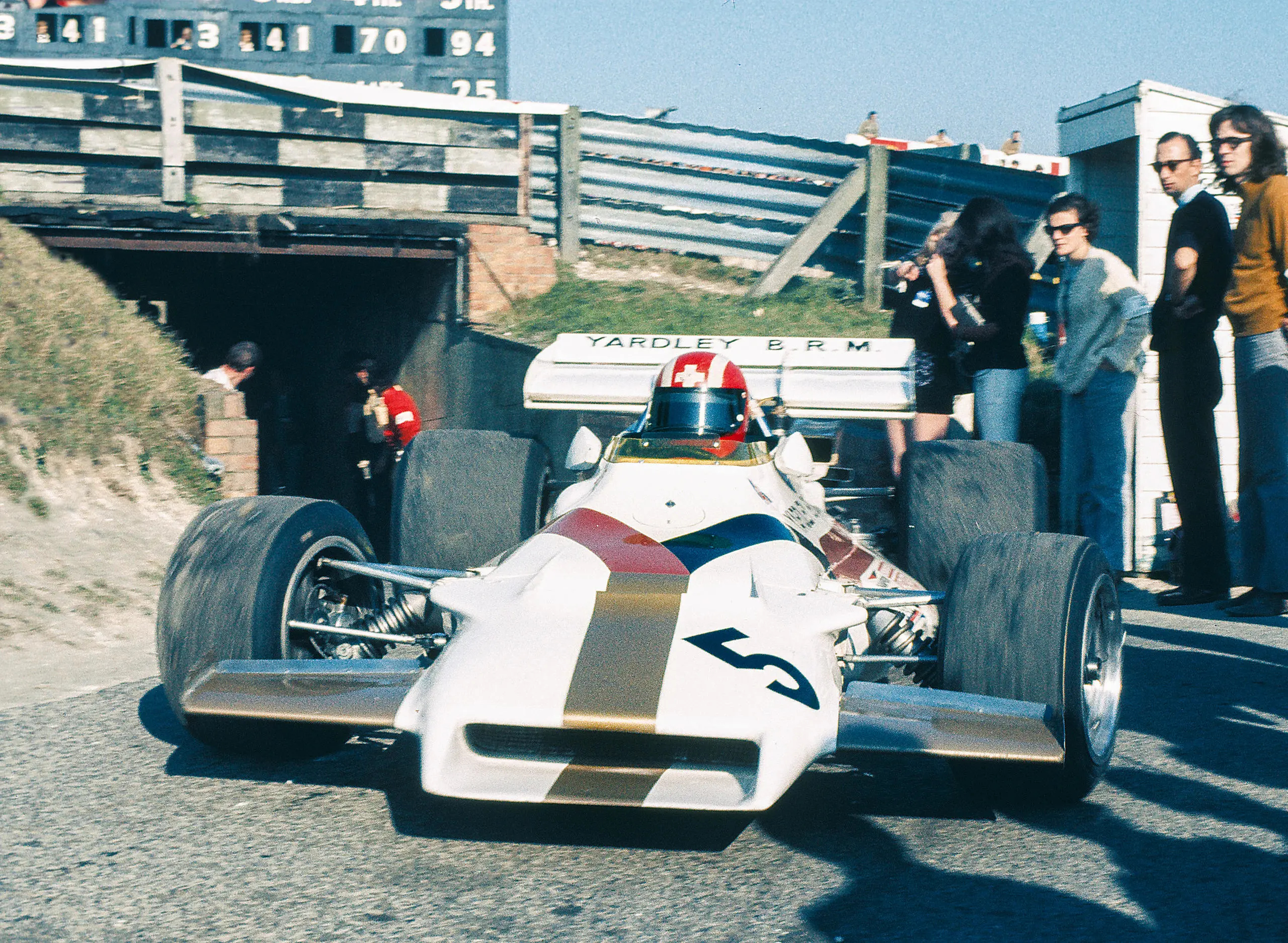
Heuer’s marketing was rooted in racing, and its most useful asset was a Swiss driver. Jo Siffert signed with Heuer around 1969 and is credited as the first racing driver sponsored by a watch brand. Sources vary between 1969 and 1970 for the agreement. On the track, he was associated with the round Autavia, not the Monaco. His influence on the Monaco was indirect, but it mattered.
Le Mans, 1970
Siffert worked on McQueen’s film as adviser and driver trainer while it was shot at the real circuit. Seeking authenticity, McQueen asked how to make his role more convincing, and Siffert lent him a racing suit bearing the Heuer crest.
How McQueen then chose Monaco depends on whom you ask. TAG Heuer’s anniversary materials suggest he saw Siffert’s Autavia and simply preferred something different. Robb Report recounts another version, in which the property master offered a selection and McQueen first picked an OMEGA Speedmaster. An OMEGA beside a Heuer patch was deemed incongruous, so the blue Monaco followed. A third account, attributed to Jack Heuer, has McQueen returning the OMEGA because he did not want a brand using his name in advertising.
Three stories, one watch. What is certain is that several identical examples of the 1133B were sourced for the production, and that the film itself never names the watch. It appears alongside white overalls and a Porsche 917 as part of the character.
The Long Exile and the Returns
Recognition did not arrive on schedule. The return came in stages. In 1997, the first modern Monaco appeared, the black-dialled, hand-wound CS2110, made in a run of 5,000. In 2009, for the fortieth anniversary, TAG Heuer launched its first Calibre 11 Monaco, with the crown on the left as in 1969, alongside a Calibre 12 series that included a blue and white “McQueen” colourway. Since 2015, the brand has issued several limited edition Calibre 11 Monacos, including a five-watch series for the fiftieth anniversary.
Why does this design keep returning? A film gave it a reference point, and nothing else looks like it. The square case, the left-hand crown and the blue dial are each reasons to recognise it at a glance, and each came from a decision made in 1969.
A Square Watch in a Cricket-First Country
India is a different test. Cricket commands national attention, and Le Mans in 1970 lies outside any shared memory. Yet TAG Heuer is investing seriously. After closing its corporate office and restructuring a decade ago, the brand partnered with Kapoor Watch Company and opened its first exclusive India boutique in April 2026. The boutique is located in DLF Mall of India, Noida. Guillaume Boilot, managing director for the Middle East, India, Africa and Turkey, expects India’s growth to be the strongest in that region and aims to double the business within five years.
Pratiek Kapoor, director of Kapoor Watch Company, credits higher discretionary incomes since the pandemic and a younger generation of buyers. Neither executive mentioned the Monaco, so what follows is interpretation rather than testimony.
A young collector in Delhi or Mumbai encounters the Monaco without nostalgia, which may be an advantage. It cannot be purchased as a memory of 1970. It must be judged as a design with a documented history: a shape born of engineering and a film that placed it on screen. Motor racing is not foreign either, as India hosted a Formula 1 Grand Prix in Greater Noida, near that first boutique.
Side by Side
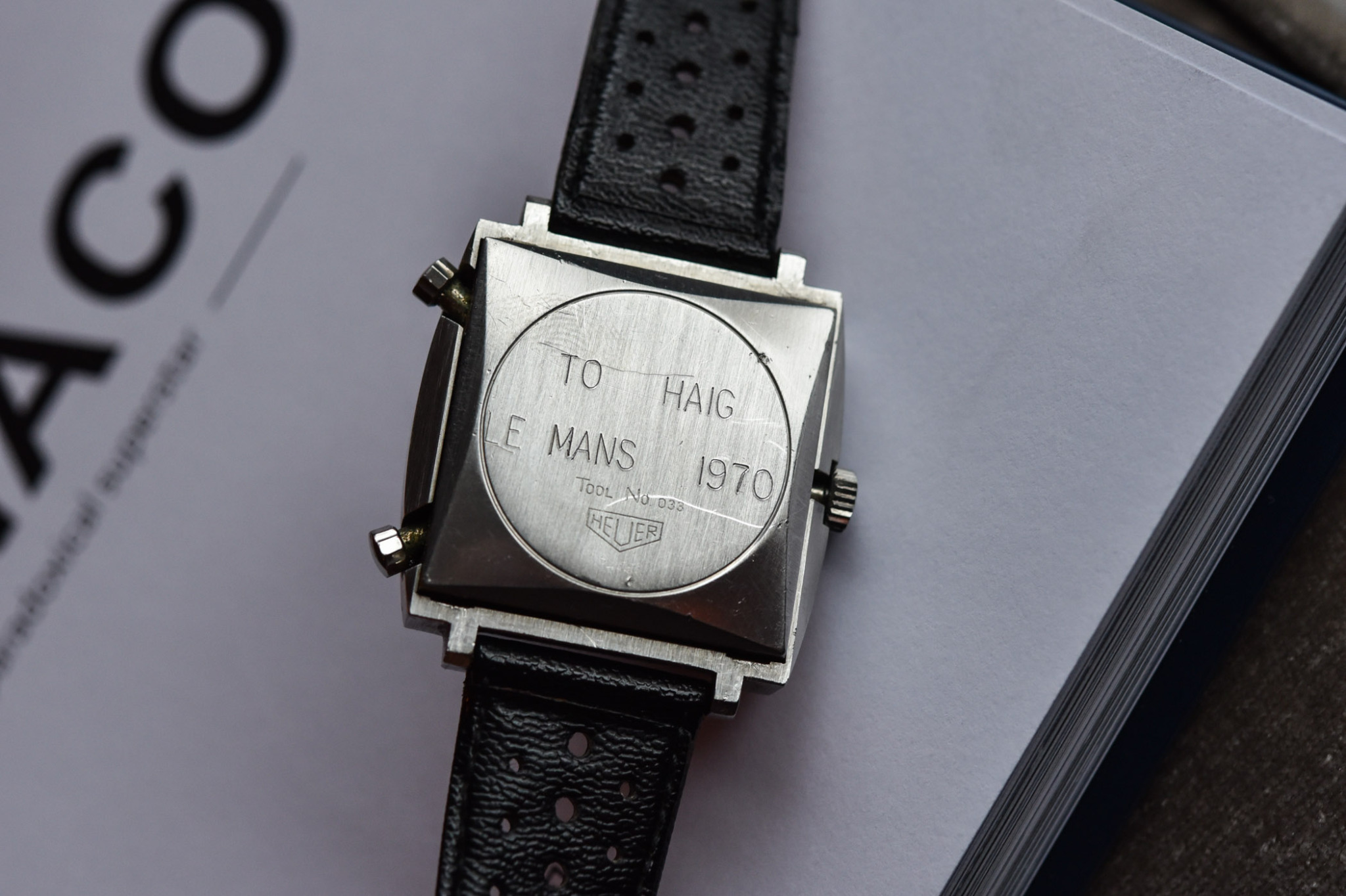
Set a 1969 Monaco beside a modern one and the resemblance is deliberate: the square case, the rounded subdials and the crown on the left, which TAG Heuer still retains on its Calibre 11 models. The vintage watch shows a decision made under pressure. The modern one shows a decision to keep it.
Heuer chose the case, and the movement chose the crown, but neither chose the reputation. A film set, a driver’s racing suit and a disputed choice of watch did that, years before anyone thought of the Monaco as an icon. The best icons are often accidents: good decisions that circumstance then made famous.
Image Credits: TAG Heuer, Monochrome watches



.jpg)