Four Faces of Indian Time Telling: A Horological Kindle


Every Indian watch story once began identically: the same grandfather, the same steel case, the same three letters engraved upon the dial. HMT, Hindustan Machine Tools, inaugurated India’s first wristwatch factory in Bangalore in 1961, forged in partnership with Japan’s Citizen. For three decades it reigned, by its own proclamation, as “Timekeeper to the Nation”. Waiting lists stretched across months. An entire generation learnt to read time on its dials, then passed those same watches to the next. By the 1990s, the enterprise that had once outproduced every domestic rival began to falter, and eventually ceased manufacturing altogether.
What followed was not a single heir but a dispersal. Titan, conceived on an entirely different premise of scale and accessibility, ascended as the new establishment. From beneath HMT’s shadow emerged a wave of microbrands that inherited its watches without inheriting its script, each composing an independent mythology from that shared point of departure. Delhi Watch Company transmuted a grandfather’s bequest into velocity. Jaipur Watch Company affixed history itself to the forearm. Bangalore Watch Company staked its fortune on tomorrow. One origin, four unrelated sequels.
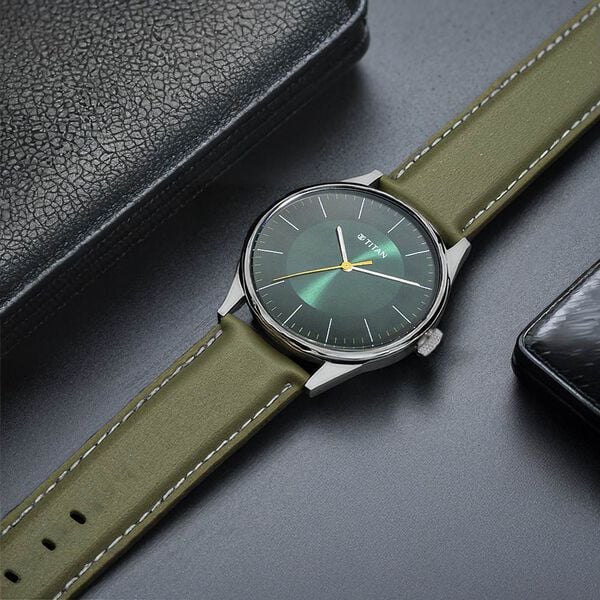
Titan: A proper watch
Certain brands amplify significance through scarcity; Titan amplified its through sheer ubiquity, and by arriving at precisely the moment HMT could no longer sustain its own momentum. Incorporated in 1984 as a joint venture between the Tata Group and the Tamil Nadu Industrial Development Corporation, Titan established its first plant in Hosur on a wager entirely indifferent to heritage: that an accurate, competently engineered quartz watch belonged within reach of the ordinary household rather than above it. That wager cultivated the country's preeminent watchmaker, and its name eventually became a synonym for the very notion of "a proper watch".
Titan's sentimentality is collective rather than authored. No founder's remembrance narrates it. Its mythology instead resides within millions of unexceptional memories, a father's wrist glimpsed at a dinner table, a graduation gift wrapped with disproportionate ceremony, a first indulgence purchased against a first salary, each household oblivious to its own participation in a brand's folklore. That reticence constitutes its own form of authority. Titan remains the ambient hum against which every subsequent Indian watchmaker has been obliged to define itself.
Delhi Watch Company: From inheritance to momentum
Anish Dandwani founded Delhi Watch Company (DWC) in 2020, tracing its provenance to two HMT watches his grandfather once passed down to him, the same three letters that opened this account, here surviving not as an institution but as a keepsake. What commenced as bedroom experimentation with entry-level cases and movements, conducted within an industry so entrenched in tradition that many of its factories lacked even a website, hardened over time into named collections: Havelock, Heritage, Everest.
The aspiration embedded in that final name was fulfilled with startling literalness. In May 2024, the DWC Everest summited its namesake peak upon the wrist of Kami Rita Sherpa, holder of the record for most ascents in history, a brand's founding metaphor rendered suddenly, verifiably true at 8,849 metres. DWC's emotional register is inheritance accelerated into momentum: culturally fluent drops referencing Formula One and Devanagari numerals, a fifth-anniversary case modelled upon a climber's carabiner that circulated virally within days. A private memory, scaled without forfeiting its intimacy.

Jaipur Watch Company: An exhibition of colonial ephemera
Founder Gaurav Mehta's origin is disarmingly unassuming. As a child sifting through his grandfather's coin collection, he cultivated a fascination that resolved itself, years later, into an impulsive gesture: embedding a British India coin within a watch case, purely to observe its effect. That gesture became habit, and habit became enterprise.
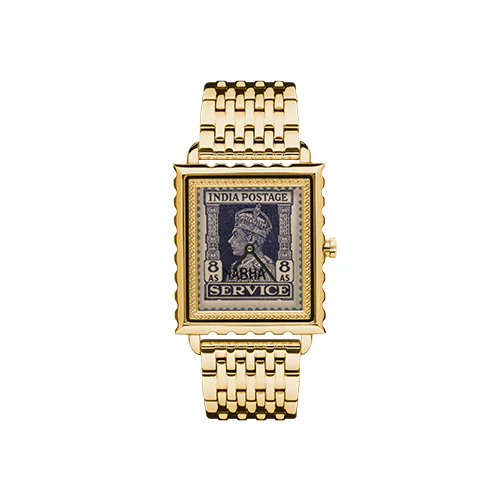
The resulting output reads less as a product line than as an archive worn upon the body. Genuine one-piece coins minted between 1943 and 1947 occupy dials finished with Devanagari numerals; postal stamps issued across the 1930s and 1940s perform an identical alchemy. Where DWC's sentiment is personal, Jaipur's is civilisational, a nation's discarded colonial-era ephemera transmuted into unmistakable pride. Validation arrived, unsurprisingly, from precisely the quarter one might anticipate: cricketing legend Kapil Dev, musician Ed Sheeran, photographed wearing a coin watch built around a 1947 rupee, and a member of Jaipur's own royal lineage. Heritage, vouched for by history's own custodians.
Bangalore Watch Company: An expression of honour and Indian engineering
Founded in 2018 by the husband-and-wife team of Nirupesh Joshi and Mercy Amalraj, former software consultants who forsook stable careers in Hong Kong, Bangalore Watch Company (BWC) was greeted early with a blunt prognosis from industry veterans: that it might not outlast its second year. It did considerably more than persist.
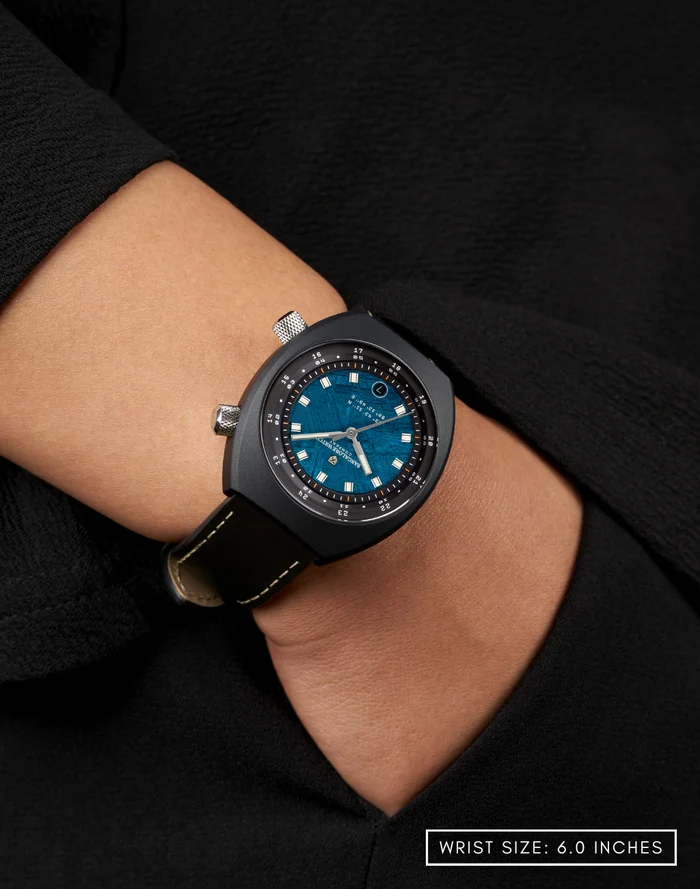
Where Jaipur gazes backward, BWC fixes its attention squarely upon the India of the present: MACH 1, honouring its Air Force; Cover Drive, honouring cricket; and Apogee, which became the first Indian watch cleared for genuine spaceflight. The founders describe their output as a reflection of a modern, self-assured India, a deliberate departure from folkloric convention. That defiance has since accumulated tangible proof. In 2025, BWC became the first independent Indian brand admitted to the Grand Prix d'Horlogerie de Genève. It returned in 2026 with the Peninsula Carbon, its dial fashioned from carbon extracted directly from the atmosphere, its minute track reconceived as an Air Quality Index, an underdog's argument finally vindicated on the industry's own terms.
Four definitions of "Indian" on wrist
No shared institution binds these four, only a shared point of departure. A single factory in Bangalore once taught an entire nation what a watch was meant to signify; everything thereafter has been independent variation. Titan offers collective familiarity. Delhi Watch Company offers inheritance transmuted into enterprise. Jaipur Watch Company offers civilisational pride. Bangalore Watch Company offers defiant, contemporary confidence. Four premises, the same pole star, and an industry finally mature enough to pave its way even without the star in sight. Four brands, remarkably defining Indian expressions of time telling.
Image credits - Titan, Delhi watch company, Jaipur watch company, Bangalore watch company