Is slow creativity luxury's answer to AI fatigue?
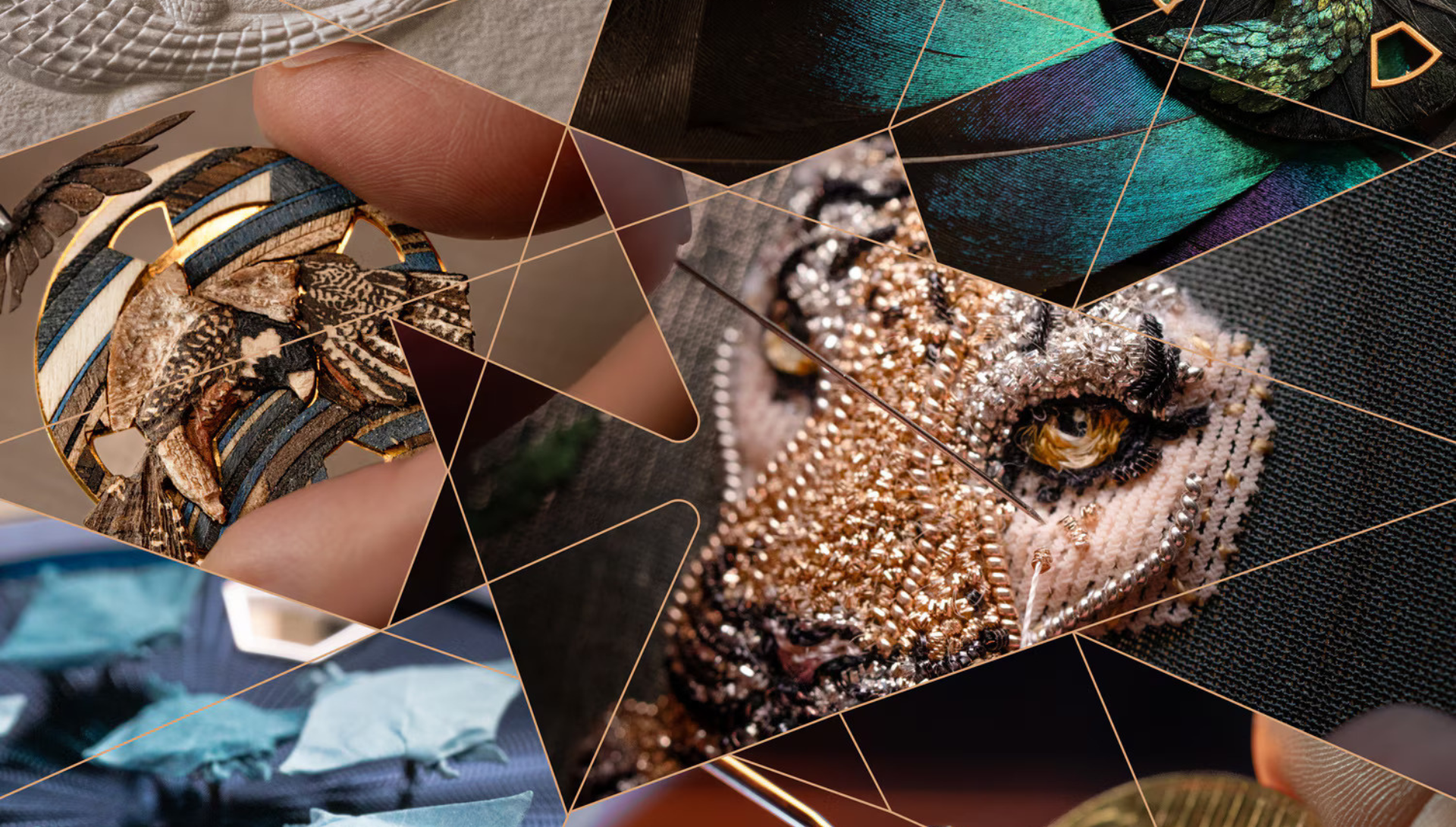

In August, Swiss watchmaker Vacheron Constantin shared a glimpse of the rare crafts behind its Homo Faber 2026 creations. Gold threads were embroidered onto miniature dials, goose feathers shaped into intricate motifs, and animal forms sculpted from paper, glass and wood. This was no ordinary watchmaking film. Its almost surreal imagery was built around real materials, remarkable skill and the human touch.
Call it slow creativity — a counterpoint to the instant output of generative AI. When almost anything can be conjured in seconds, the real indulgence may lie in owning something that takes weeks, months or even years to create. While AI can produce elaborate illustrations and entire campaigns with a few prompts, luxury maisons are increasingly taking the longer route, bringing artists and craftspeople into the creative fold.
As AI makes deeper inroads into design, rendering and visual production, these collaborations offer a timely reminder of the value of human ingenuity. By commissioning illustrators, craftspeople and independent artists, these maisons are making a case for putting creative work back in human hands.
Giving it back to the artist
At Homo Faber 2026, the cultural movement celebrating contemporary craftsmanship in Venice, Vacheron Constantin invited six artisans from disciplines beyond traditional watchmaking to reinterpret the watch dial as a miniature artistic canvas. Part of its Tribute to the Animal Kingdom series, the six unique concept timepieces brought together techniques that are more commonly encountered in ateliers than horological workshops.
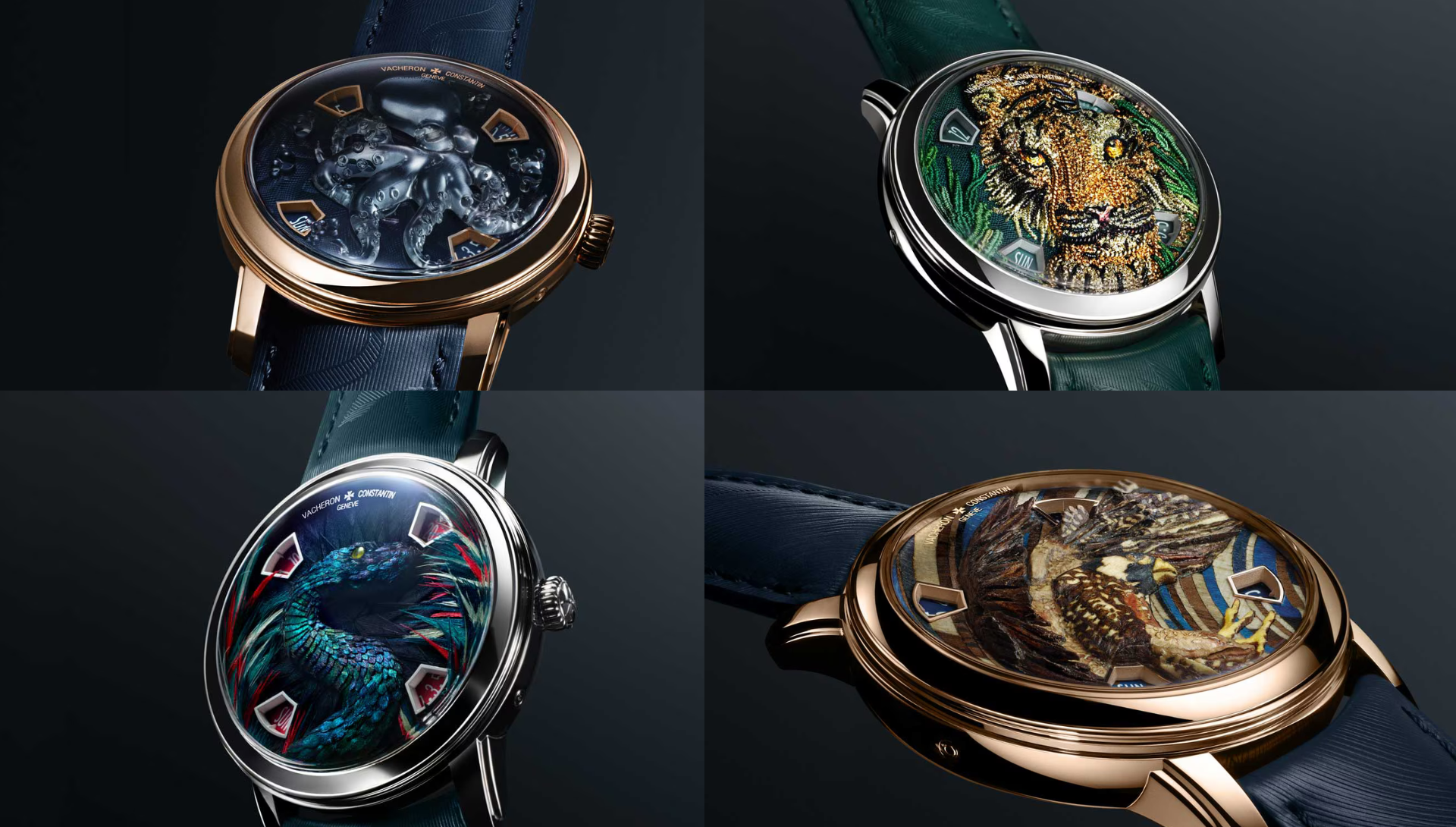
Micro-origami, feather marquetry, gold embroidery, glass sculpting, paper sculpting and wood marquetry seeped into horology into an unusually imaginative menagerie. The results were rather extraordinary. Artists and their creations for Vacheron Constantin:
Anya Midori (Oraygami): Hand-coloured paper manta rays crafted through the delicate art of micro-origami.
Julien Vermeulen (Feathersnake): Iridescent goose feathers assembled into a striking serpent motif.
Laura Baverstock (Tigerbroidery): Intricate gold embroidery depicting wildlife, including a tiger.
Simone Crestani (Glassoctopus): Delicately sculpted glass transformed into an octopus motif.
Marianne Guely (Papercroc): Paper sculpting used to create an alligator-inspired miniature.
Anna Le Corno (Woodenwings): Wood marquetry celebrating avian forms and the natural patterns of wings.
It is a compelling reminder that a watch dial need not merely tell time. Occasionally, it can house an entire natural history museum conceptualised and brought to life by human hands.
Back to the drawing board
In an era of computer-generated spectacles, Prada has gone decidedly old-school with its winter campaign, Drawing Prada: Animated by Hand.
The campaign brings together veteran Disney animators John Pomeroy and Tom Bancroft, with live-action photography directed by Glen Luchford. Actors Maya Hawke, Sadie Sink, Chen Haoyu, Luther Ford and Kelvin Harrison Jr. find themselves in a whimsical winter landscape populated by hand-drawn animated characters.
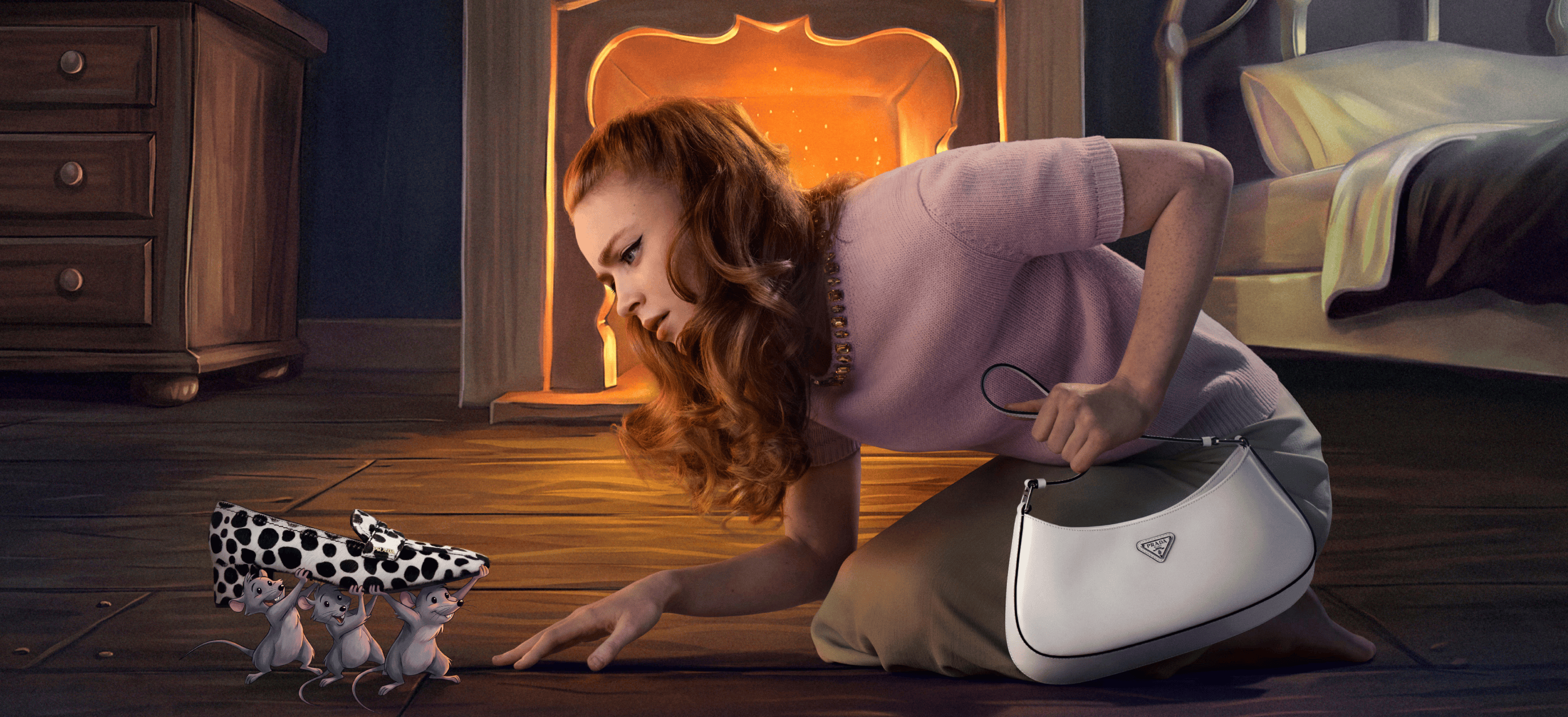
The resulting film has the nostalgic charm of classic animation, recalling the illustrated worlds of the 1990s, when every frame demanded an artist's time and attention. Rather than treating animation as a convenient digital embellishment, Prada made the drawing process central to the campaign's visual identity. The characters appear to inhabit the same world as the actors, creating an interplay between photography and illustration that feels wonderfully tactile.
Small wonders for the season
Cartier, meanwhile, has turned its boutique windows into an exercise in miniature storytelling, collaborating with New Delhi-born artist Sukanya Ayde, whose practice draws on traditional Indian art and miniature painting.
With the Maison's baby panther as its muse, the handcrafted window displays in New Delhi and Mumbai take inspiration from the palaces of Rajasthan. Hand-carved columns, ornate arches and intricate architectural details establish a setting illuminated by sunset hues, fireworks, diyas and lanterns. Amid this carefully composed tableau, the playful baby panther peeks through the displays, lending the installation a sense of movement and mischief.

The collaboration is particularly interesting for the way it brings traditional Indian visual vocabulary into a contemporary luxury retail environment. It is retail theatre, certainly, but with considerably more soul than a screen looping a digitally rendered fantasy.

A dragon under the microscope
A dragon on a watch dial is hardly an unprecedented idea. Having one painstakingly painted in Grand Feu enamel by an artist known for illustrating the fantastical worlds of The Lord of the Rings, however, is another matter. In 2025, Jaquet Droz collaborated with fantasy illustrator John Howe on a one-of-a-kind Tourbillon Dragon timepiece. The project brought together Howe, a collector and the Maison's master artisans to translate the illustrator's artistic imagination into a miniature horological composition.

The dragon, hand-painted on the dial using Grand Feu enamel techniques, is a meeting point between fantasy illustration and the demanding traditions of decorative watchmaking. It is also an apt example of how an artist's individual visual language can be carried into an object without losing its character. The result is not simply a watch with an illustration on it; it is an artwork that happens to keep time.
Is slow creativity luxury's answer to AI fatigue?
The appeal of these collaborations extends beyond the finished object. They draw attention to the process, the person behind the work and the many hours of skill that a polished final image can so easily conceal. As AI increasingly finds its way into design, rendering, catalogue production, advertising and visual communication, the creative industries are negotiating an uncomfortable question: where does technological assistance end and human authorship begin?
For luxury houses, commissioning artists is one way of keeping that distinction visible. It is not necessarily an outright rejection of AI, nor does it suggest that technology has no place in creative production. Rather, it is an investment in something that remains difficult to commoditise: an individual's technique, instinct, experience and artistic sensibility.
There is, however, a commercial complication. While established luxury houses may have the resources to commission artists and artisans, smaller watch and jewellery labels often operate under different constraints. For them, AI-generated visuals can be an economical and efficient way to produce campaign assets, product renderings and catalogue imagery without the budgets required for large-scale creative collaborations. Yet accessibility and authenticity are not always interchangeable. The ethics of AI-generated art remain contested, particularly when questions of creative ownership, compensation and the livelihoods of working artists enter the conversation.
Perhaps the more useful distinction is not between human creativity and technology, but between using technology as a tool and allowing it to become a substitute for creative thought. And so, luxury is making an interesting proposition: that the human hand is not an obsolete instrument in the age of automation, but a mark of distinction in its own right.
Image credits: Respective brands