Rado’s True Square Skeleton: Making the Case for Visible Innovation
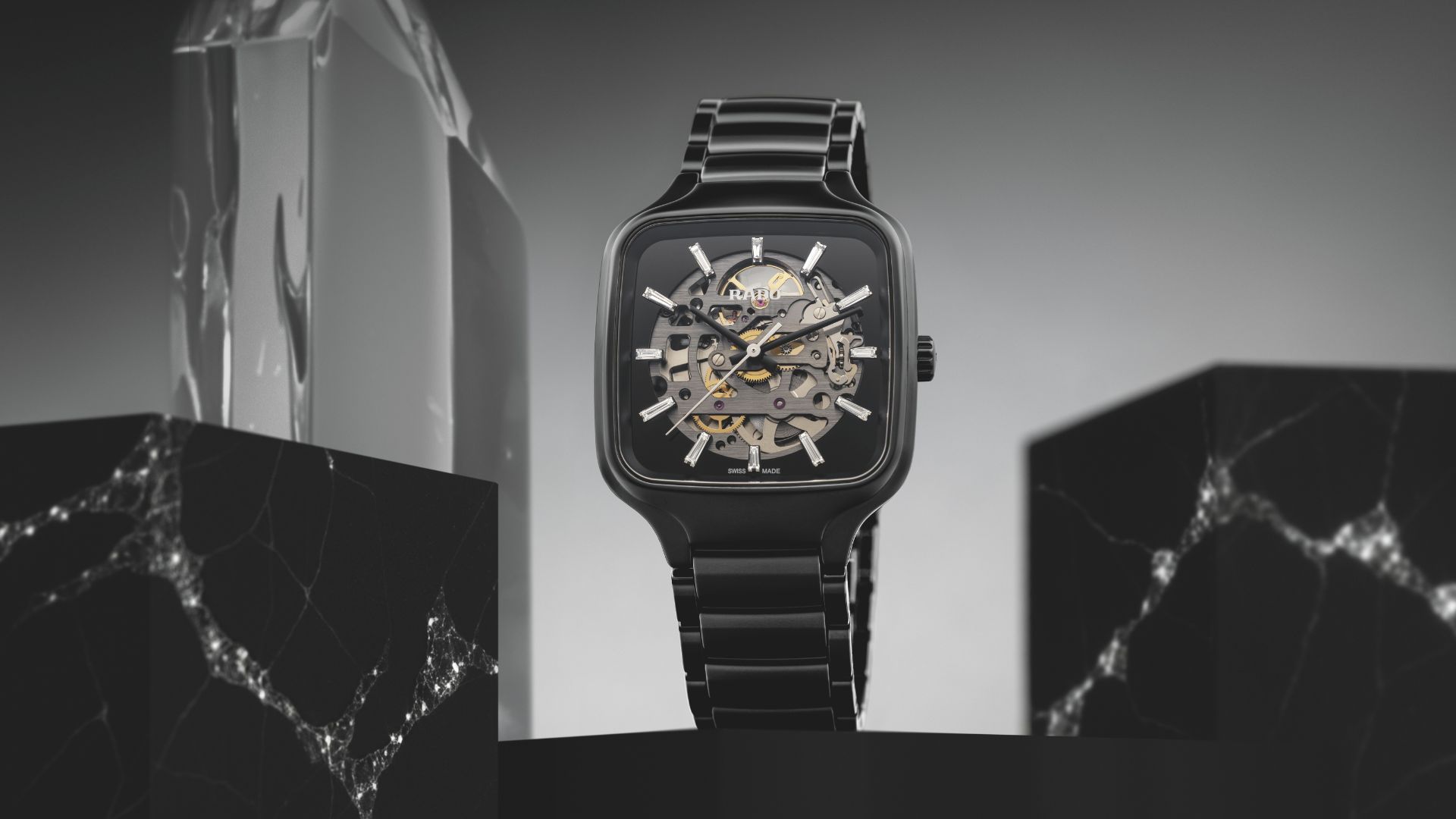

There’s something quite disarming about how openly some watches announce themselves. A lack of pretence, no gradual reveals. The Rado True Square Skeleton does not ask you to discover its material story slowly; rather, it places it right on the surface. Ceramic, skeletonisation, geometry. All present and intentional to demonstrate how innovation in watchmaking always makes its presence known. It is framed, polished, and put to work as part of the design language.
Ceramic as the Central Argument
Rado has long understood material as a central argument. Since the late 1980s, high-tech ceramic has been the brand’s calling card, not purely for its novelty but because it tends to behave differently. It resists scratches, carries colour with unusual depth, and perhaps, most importantly, it wears quietly and comfortably. Ceramic does not announce itself with weight or temperature, but sinuously graces the wrist and stays there. In the True Square Skeleton, that familiarity becomes the foundation for something more visually assertive.
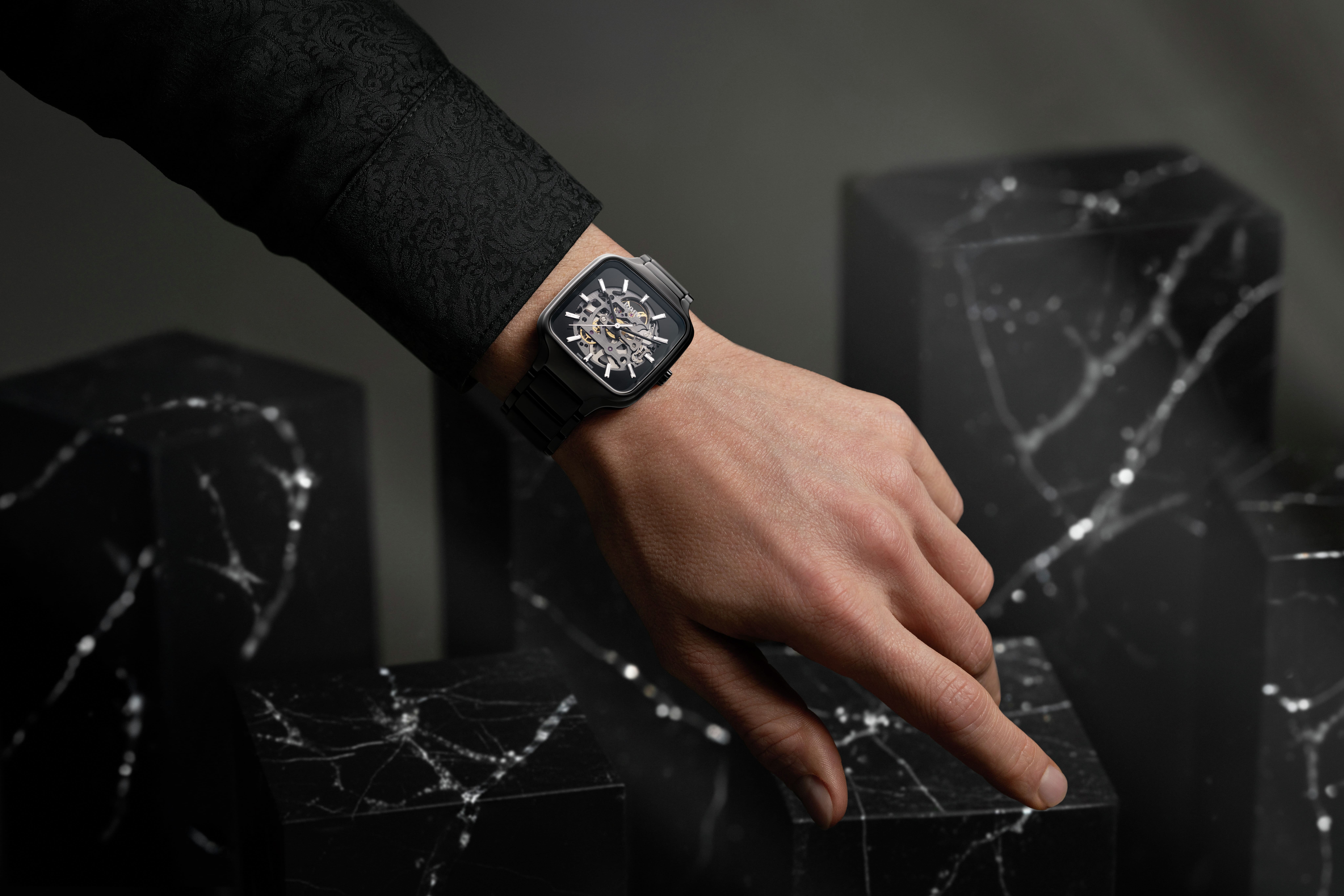
The square case, softened at the corners, has become one of Rado’s most recognisable forms. Here, it is rendered in polished black ceramic, monobloc in construction, with a matching bracelet that continues the material story uninterrupted. There is no attempt to disguise the fact that this is a modern object. The case measures 38mm by 44.2mm and remains slim at 9.7mm, proportions that keep the watch wearable despite its openworked ambition.
Skeletonisation with Discipline
Skeletonisation is often where watches lose their composure. Too much information, not enough composure. The True Square Skeleton avoids that trap by imposing order. The dial is divided into horizontal sections, brushed and coated in anthracite, creating a sense of structure. Twelve trapezoidal baguette diamonds mark the hours, four anchoring the 3,6,9,12, and eight filling the intervals. They are precise, not decorative flourishes, guiding the eye through to the mechanics beneath.
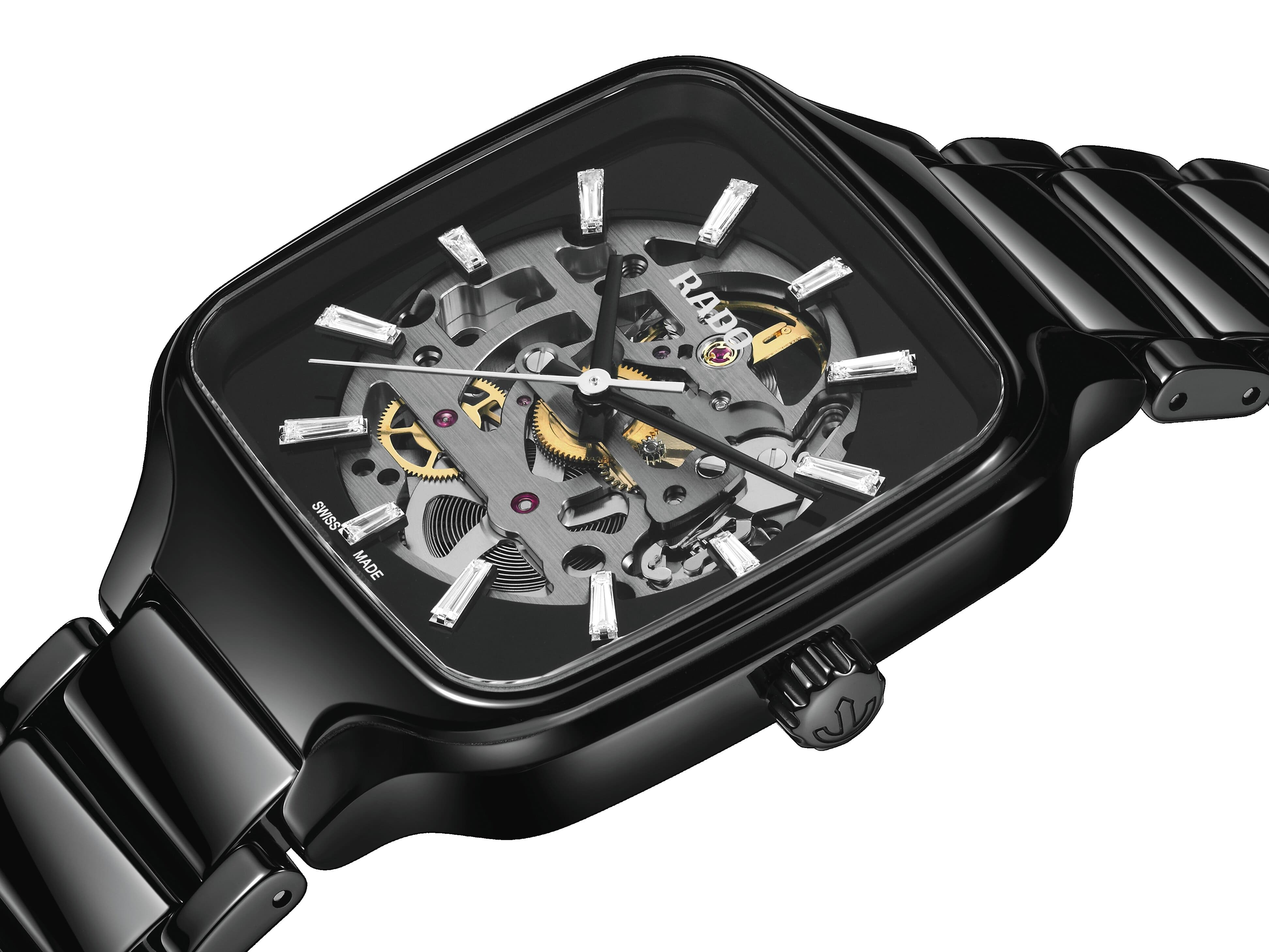
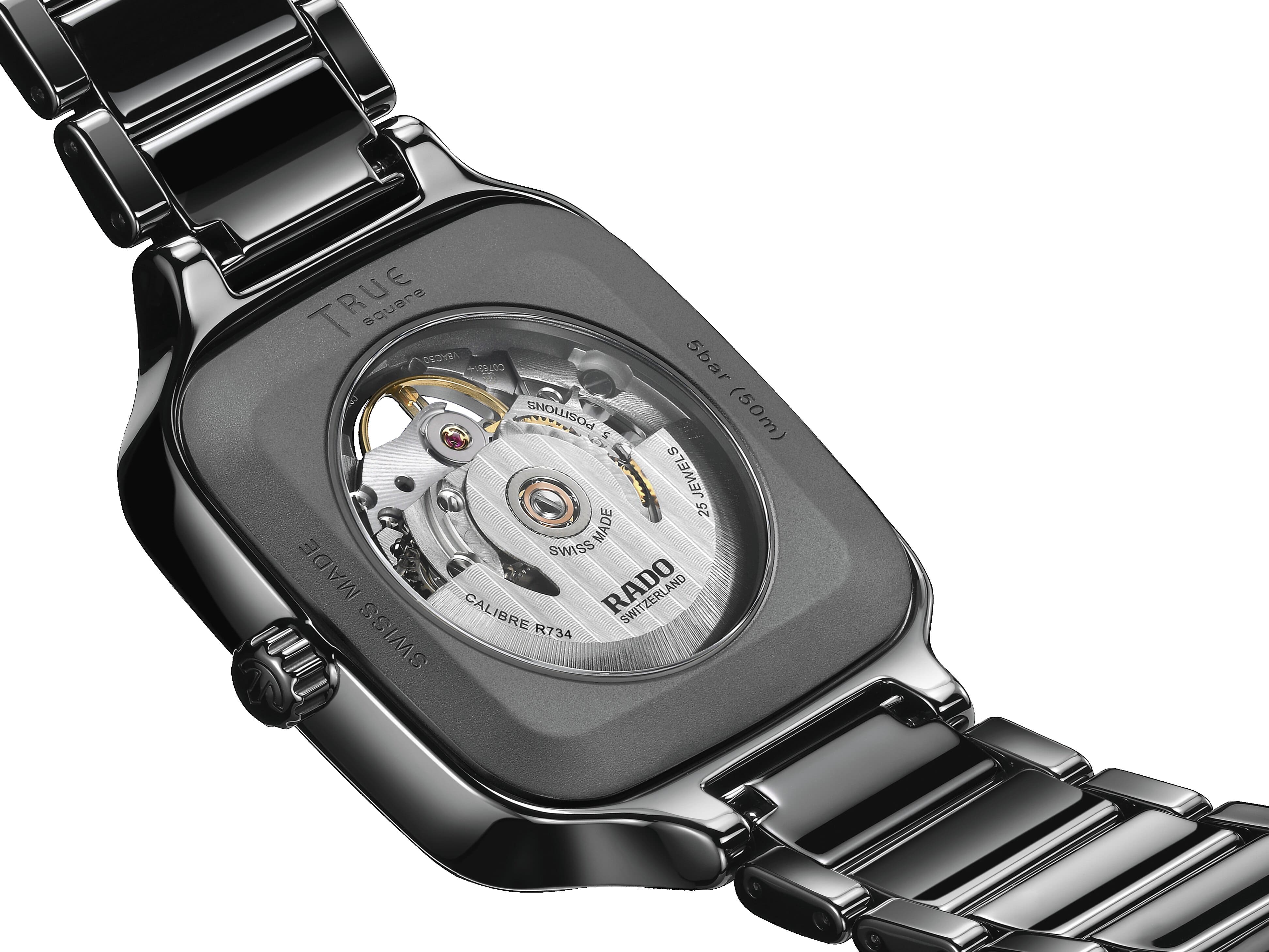
Under the sapphire crystal sits the Rado calibre R808, artfully skeletonised to sit within the Maison’s lineage . It is an automatic, three-hand movement with 25 jewels, an 80-hour power reserve, and a Nivachron hairspring chosen for its resistance to magnetism and temperature variation. The movement is tested in five positions, a practical decision that underscores Rado’s focus on reliability rather than complication for its own sake. Turn the watch over and the nickel-coloured reverse of the movement is visible through the sapphire caseback, reinforcing the sense that nothing here is meant to be hidden.
A Modern Statement
What makes the True Square Skeleton interesting is that it is clear about what it values. It’s not a piece chasing nostalgia, nor is it trying to compete in the rarefied language of haute complications. Instead, it occupies a space where material science and mechanical watchmaking meet a crescendo of design.
This has been a year of emotional storytelling with anniversary editions and heritage re-releases. The Rado True Square Skeleton feels refreshingly modern, making a case for contemporary watchmaking—that materials matter, that mechanics can be exposed without becoming overtly theatrical, that design discipline is as important as innovation. In a true sense, it’s a timepiece that rewards clarity by looking forward.
Image credits: Respective brands