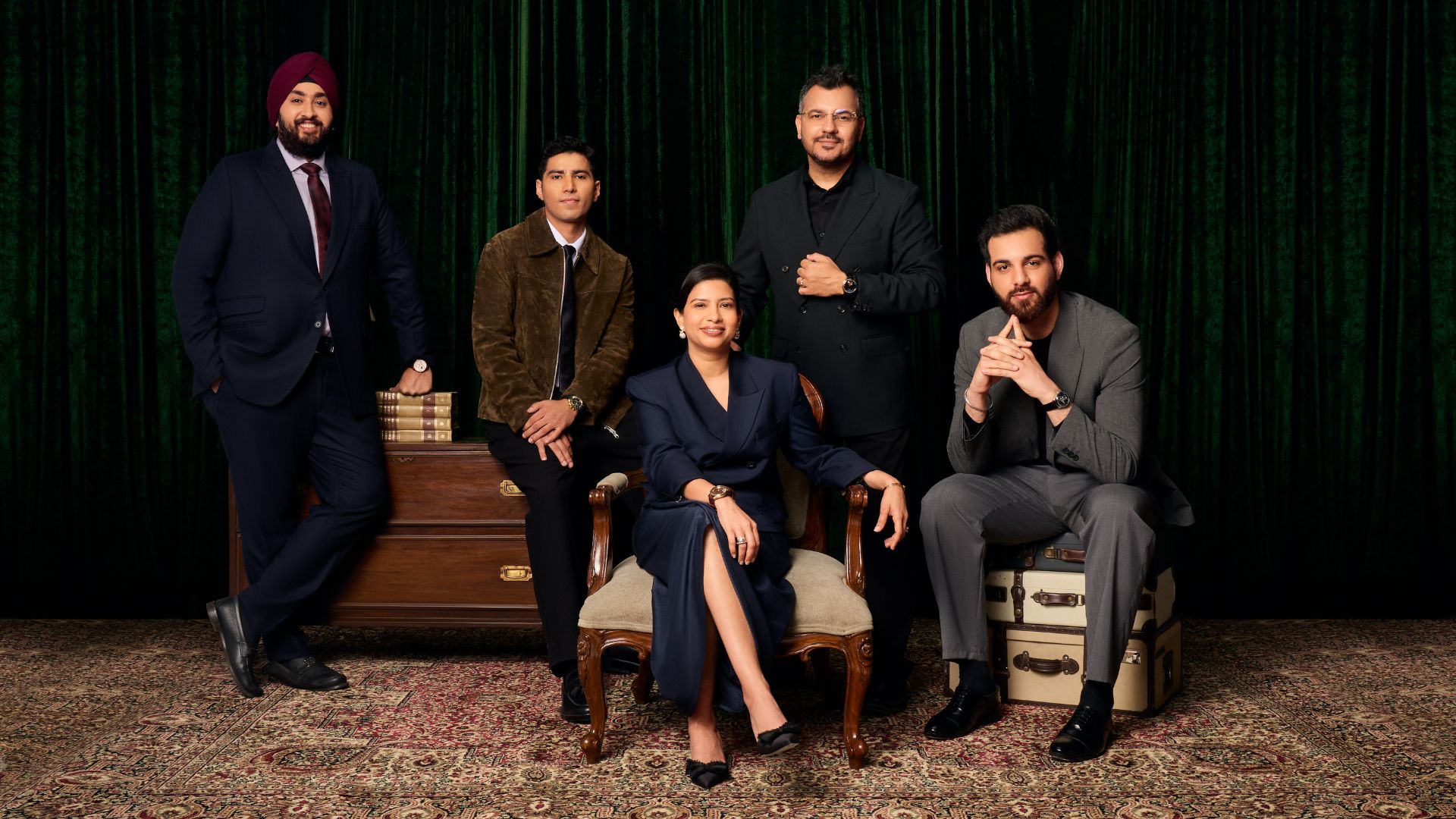
India Is a Very Important Market: Gregory Kissling, CEO, Breguet
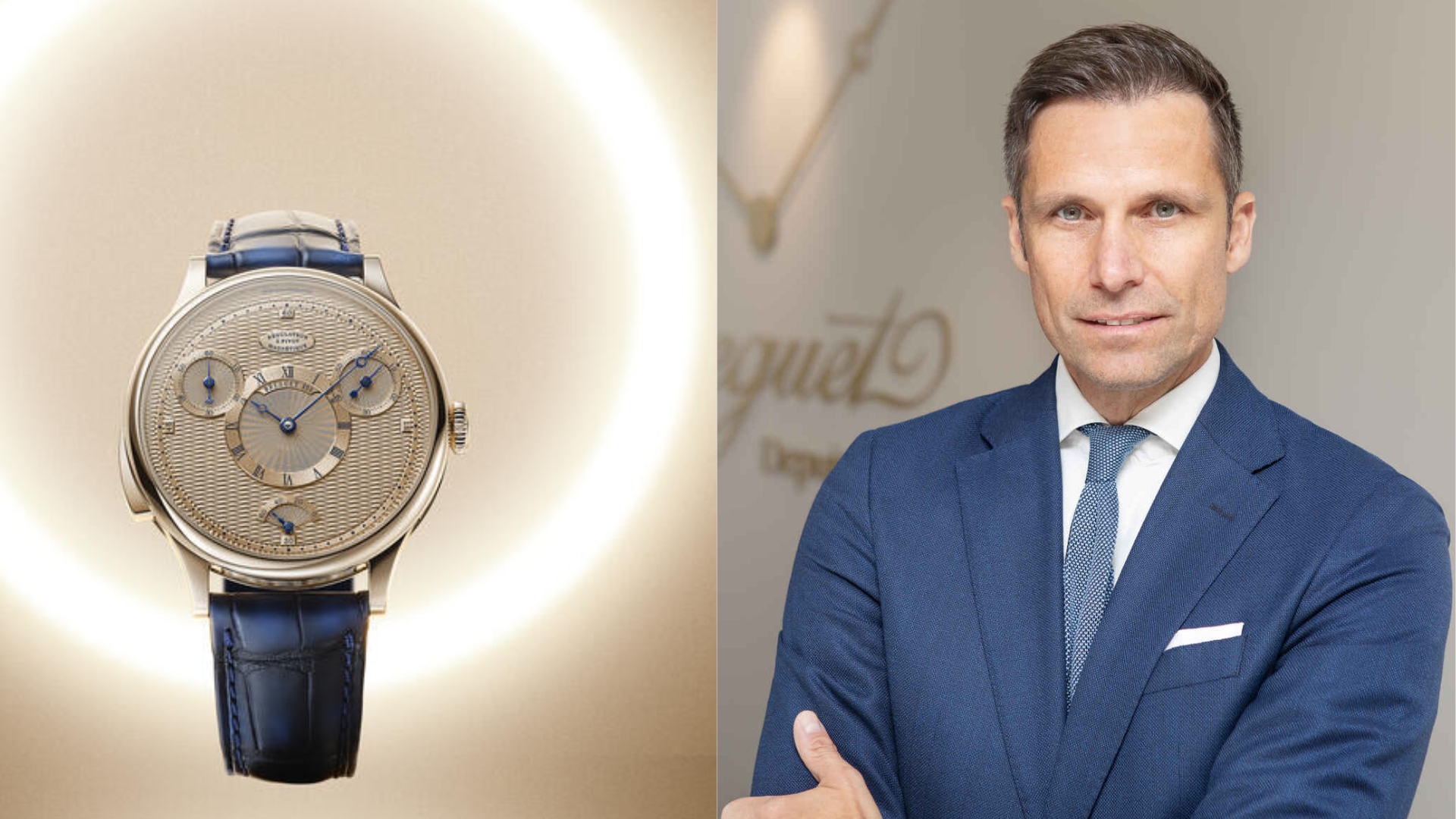

Gregory Kissling stands at the helm of Breguet at a pivotal moment in the Maison’s storied history. As the CEO, he carries the weight of over two centuries of horological innovation while steering the brand towards a future shaped by relevance, restraint, and quiet authority. With a deep understanding of both heritage and contemporary luxury, Kissling approaches leadership with a measured, detail-driven philosophy – one that mirrors Breguet’s own language of precision and refinement. Under his stewardship, the Maison continues to honour Abraham-Louis Breguet’s legacy while subtly recalibrating its voice for a new generation of collectors.
GMT India caught up with Gregory Kissling, CEO of Breguet, during the hustle and bustle of Dubai Watch Week, at a special exhibition organised at the brand’s boutique in Dubai Mall.
Breguet stands as one of watchmaking’s most storied maisons, with a heritage spanning 250 years. How do you strike the balance between safeguarding that legacy and driving innovation to resonate with today’s audiences?
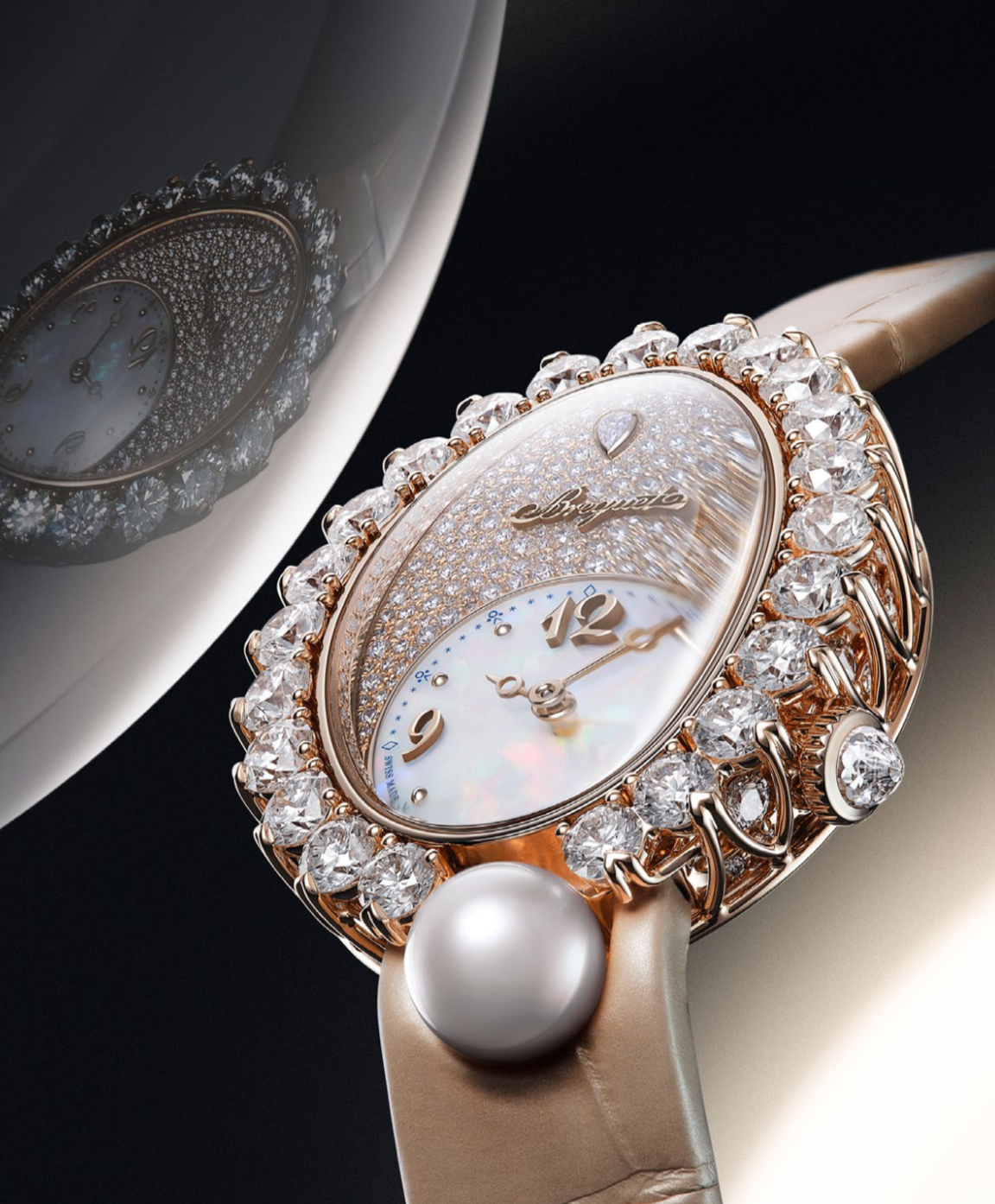
It’s a quarter of a millennium, a truly iconic moment for the brand. We not only wanted to talk about the past 250 years, but we also wanted to send out a very strong signal for the next 250 years. At Breguet, we do like to mix tradition with a touch of modernity, and this is what we did with the anniversary collection. We wanted to share our different stories, different chapters. Different collections, like the Reine de Naples, the Marine, the Classique.
We also wanted to talk about the major inventions of A.-L. Breguet and that’s why we organised several temporary exhibitions, the edition in Dubai being one among several. The idea was to share with a new audience that A.-L. Breguet was the father of modern horology ― today, we continue to wear a wristwatch because of all his inventions. For the anniversary collection, we put forth the beautiful Breguet Gold alloy, inspired by the past but fortified with a touch of modernity with a specific composition.

Gold has long been integral to Breguet’s story. Could you share what this precious metal represents for the brand and its creations?
Absolutely. It started with the Marie-Antoinette pocket watch, which also has another nickname, the ‘golden pocket watch’. When Abraham-Louis Breguet received the request for producing and developing that watch, the request was to replace every part possible with gold. So it’s not just about the case in gold, but it’s also about all the components that are usually in brass.
We’ve seen a remarkable array of novelties celebrating Breguet’s heritage. How does the Maison determine which historical references to draw upon when paying tribute to such an extraordinary legacy?
We didn’t want to organise one single international event and in one night or one day to unveil a collection. We really wanted to take our time and celebrate our anniversary for one whole year. So, we decided to embark upon a world tour. We started in Paris with the launch of the Classique Souscription at Place Vendôme; it actually kicked off the anniversary world tour. We ended the tour in Paris again, but this time in Versailles, because Versailles is closely connected to Breguet as well. We have renovated the Petit Trianon, which was home to Marie-Antoinette, so there's a very strong connection between Breguet and Versailles. But the vision for 2025 was to introduce a new product nearly every month.
We started with the Classique Souscription because this watch is important for the brand. When you look back at the history of Breguet, the Souscription pocket watch saved the Maison right after the French Revolution. Abraham-Louis Breguet escaped the French Revolution, he returned to his home in Switzerland and there he spent two years inventing great things. The tourbillon was invented in Switzerland, then the Souscription and the Sympathique clock. He was a very smart businessman. He was the first watchmaker to promote his watches through a leaflet, then a catalogue.
In your view, what has enabled Breguet to endure and remain synonymous with horological mastery for 250 years?
We try to blend our heritage with modernity and continue this legacy in motion. We don’t have to copy the past, but need to be inspired by it. And, of course, we need to keep these strong design codes because not only was Abraham-Louis Breguet a genius watchmaker, he was probably the first watch designer as well. Our founder was always looking for new things, new materials, new ways of thinking. So, we need to keep the spirit, but with the means of today.
Today, we have different types of materials, different types of technologies and sometimes, we need to look out of the box. Recently, we launched the Classique 7225 with the magnetic pivot. This is also something that is definitely a breakthrough technology. A ‘breakthrough’ for me means it's a technology or a material that is really out of the box. Because of the magnetic field, most watchmakers either want to block the magnetic fields or seek to protect the movement, often by blocking interference with a Faraday cage. This is one way. Others don't care about the magnetic fields. They replace the ferromagnetic components with non-magnetic ones. At Breguet, we think differently. We decided to use this physical phenomenon to increase the precision.
Thanks to the magnetic field, the balance wheel staff has only one point of contact. That means independent of the position of your watch, the precision remains the same. And philosophically, the magnetic pivot is actually the tourbillon for wristwatches.
What does the next chapter look like for Breguet, in terms of product, positioning, and philosophy?
Firstly, the product is the hero of the brand. And then it’s all about communication. We have to also shift the way we communicate now, especially to reach a new audience. We want to show the behind-the-scenes and express our savoir-faire. The idea is to showcase the manufacture globally, think outside the box, and through diverse channels, convey that a Breguet timepiece is handcrafted — celebrated for its finishing, Métiers d’art, and more. Regarding distribution, we are also working very hard to have a kind of a utilisation programme in place. We want to reduce the number of points of sales, but at the same time, we want to increase the quality because we also want to be more and more client-centric. The service must also be very dedicated – to transmit our passion, our energy, and also our history because selling a Breguet is not like selling another type of watch. So, we also invest a lot in our people to communicate our history, our legacy.
Breguet has also been an icon in terms of design with its distinctive guilloché dials, Breguet hands, and fluted cases. What role does design evolution play in maintaining their timeless appeal?
When Breguet started his career, the watchmaking industry was very baroque. The style of the watches, the pocket watches were very heavy in terms of design, laden with a lot of ornaments. When he started producing his watches, he really wanted to clean up as much as possible, be it the dial, the hands, the hourmarkers, the case; he also wanted to reduce the thickness of the pocket watches as much as possible. Breguet designed the ‘chevet’ shaped glass. We have this ‘chevet’ shaped glass on the Souscription model because at that time, only domed glass was used. We have a duty to preserve these design codes, while also embracing the responsibility to add a subtle twist.
What role do traditional Métiers d’art and rare crafts play in the brand’s design philosophy?
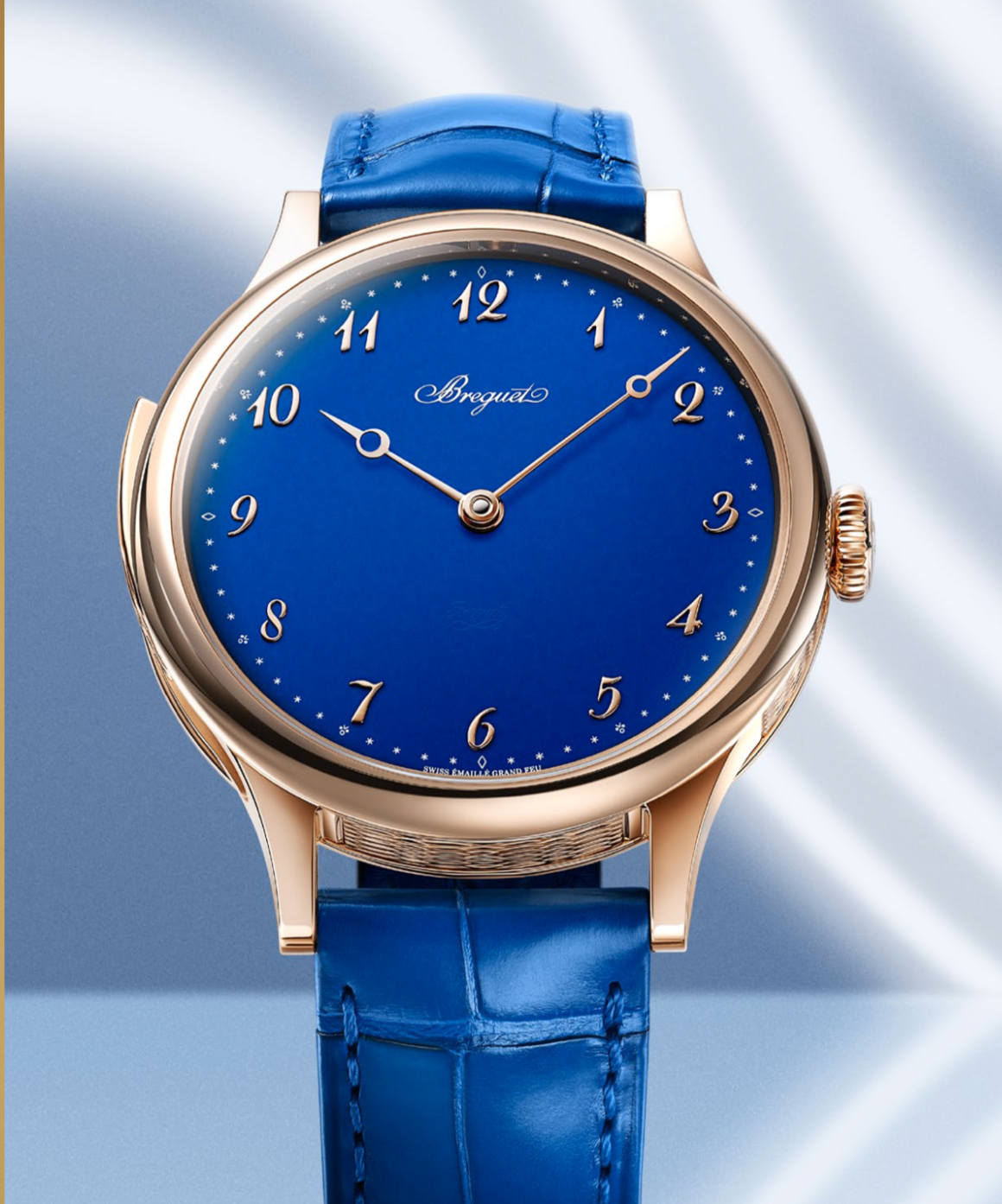
Most Breguet watches contain guilloché; if it’s not on the dial, it’s on the back. If it’s not on the back, it’s on the side of the case. We are bringing back enamelling on dials. We can also mix Métiers d’art, as with Tradition 7035, where we blend enamelling and guilloché. We’re also able to produce new motifs, new patterns. At the same time, we want to preserve Métiers d’art. We can also play with new techniques and technology with old materials, and push the boundaries.
How do you think the Indian watch market has evolved in comparison with the rest of the world?
First of all, India is a very important market for Breguet and also for other brands of the Swatch Group. We have been present in this market for more than two decades now, and we need to continue to grow here. We need to educate the new generation and invest in this market because we know that this market is growing and booming not only in New Delhi, but also in other cities; therefore, we need to be present, and show our products and explain our legacy. This is why it’s a very, very important market, which, we feel, is attentive to the heritage and history of the brand, to its authenticity, and also to its craftsmanship or savoir-faire.
Do you have a favourite Breguet watch — either from the archives or the current collection?
It’s a difficult choice. Probably the Souscription — it was my first creation, my ‘first baby’. I don’t like to choose, because when you have so many, it’s never easy. But the first one is always special, as it marked my initial bond with Breguet. The watch also received the GPHG prize. This is the emblem of the anniversary collection, the first watch that is crafted in Breguet Gold. So, this watch represents a lot for me.
Image credits: Breguet



.png)