Cosmic Custodians: Omega Takes Responsibility Beyond Earth


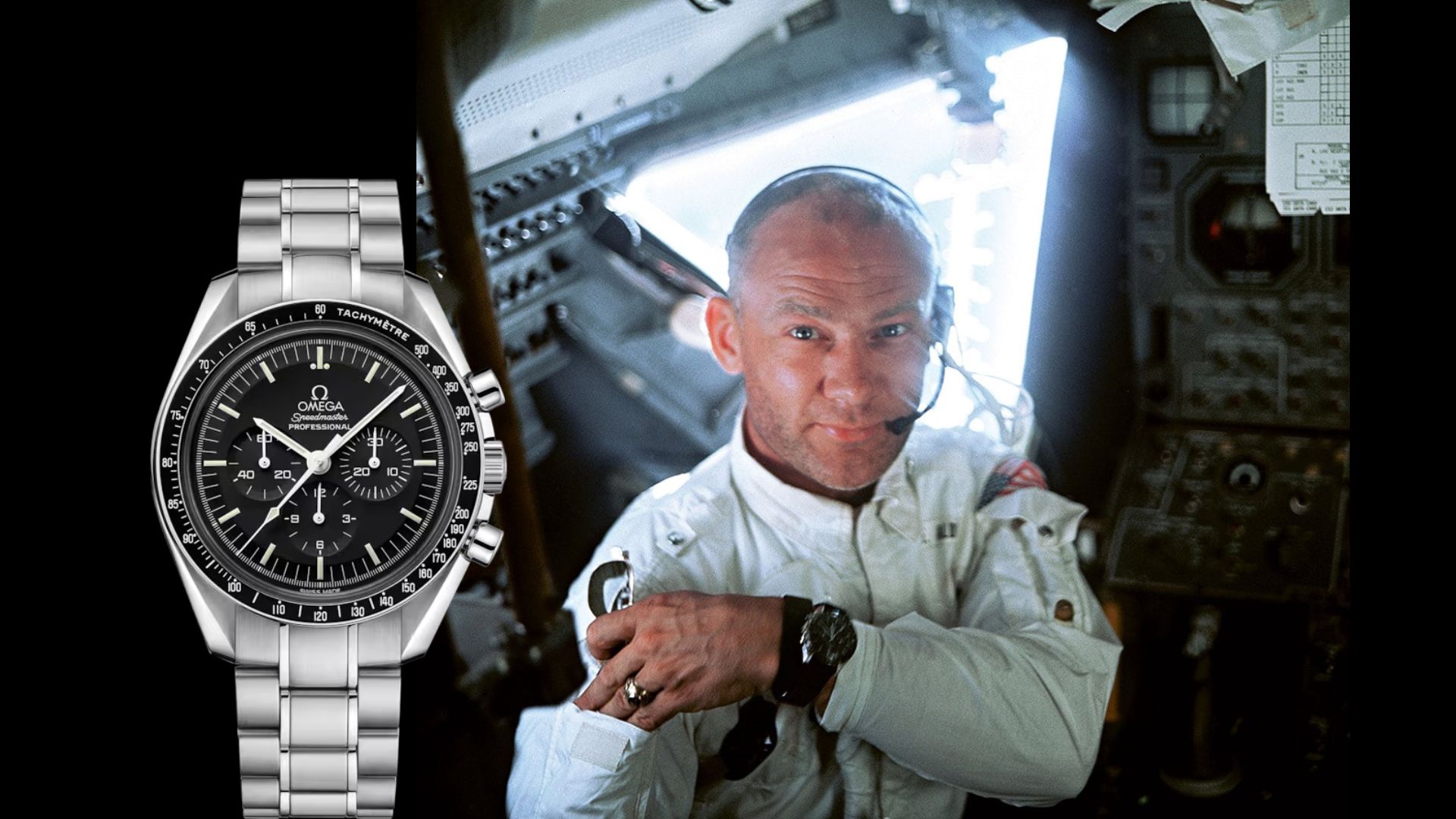
In a historic moment, humanity crossed a long-imagined threshold at 02:56 GMT on July 21, 1969. As Neil Armstrong and Buzz Aldrin walked the moon, our species made a monumental ascent measured not just in leaps, but in small seconds and lapsed hours as well. Fastened to Aldrin’s wrist was the OMEGA Speedmaster Professional, the only mechanical watch deemed fit by NASA for all manned space expeditions. From that moment on, its destiny was sealed and the timepiece had earned its enduring name: the Moonwatch, a companion forged for survival in space.
That legacy now finds renewed relevance as luxury watchmaking recalibrates itself towards a higher calling. Sustainability, even at the finest of maisons, is no longer confined to workshops, oceans, or materials — it has extended into Earth’s upper orbital layers. As space grows more accessible, those once-quiet orbital highways are becoming crowded, recasting exploration as an urgent matter of accountability. The scale of the challenge is also stark. According to data from NASA, an estimated 130 million fragments of space debris, from millimetre-sized shards to defunct satellites, are currently circling the planet. More than 36,000 tracked objects hurtle through orbit at nearly 28,000 km/h, where even a fleck of paint can spark catastrophic collisions, releasing thousands of new fragments in seconds.
As the conversation moves beyond the blue planet, attention has shifted to tracking non-cooperative satellites and mitigating debris that threaten the very infrastructure modern life depends on. It is here that OMEGA steps forward, channeling its spacefaring legacy to support missions that measure time in orbit while safeguarding Earth’s fragile environment.
Why Space Sustainability Matters Now
While maisons such as Rolex, Breitling, and Bulova have engaged with space by backing scientific research and enhancing visibility, OMEGA stands apart. Through its decades-long alignment with NASA, space has become a lived domain for the Maison ― its relationship not episodic or seasonal, but systemic, operational, and deeply woven into the mechanics of exploration. Aligned with its planetary pledge, OMEGA is championing space sustainability by supporting two critical missions: tracking satellites and clearing high-velocity debris through partnerships with Privateer, a US–based data-gathering company, and ClearSpace, a Swiss startup pioneering active debris-removal technologies.
As access to Earth’s orbit accelerates, congestion has become its most pressing challenge. Dead satellites, spent rocket stages, lost astronaut tools now crowd Earth’s space. According to space agencies, roughly 27,000 human-made objects larger than a softball are currently tracked in orbit, while 24,000 new satellites are expected to launch within the next decade.
The solution begins not with removal, but with developing a deeper understanding of space. This is where Privateer comes in. Founded by Apple co-founder Steve Wozniak, entrepreneur Alex Fielding, and space environmentalist Dr Moriba Jah, Privateer has built a transparent intelligence platform that maps orbital activity with unprecedented clarity. Its Wayfinder tool aggregates satellite and terrestrial data, pinpointing thousands of human-made objects floating in real time. By supporting Privateer, OMEGA contributes to a data-led approach that allows policymakers and private operators to anticipate collisions, coordinate launches, and plan debris-removal strategies, making shared space safer for the generations to come.
Cleaning What We Leave Behind
If data defines the problem, action defines the next frontier. To address the growing debris already in orbit, OMEGA also supports ClearSpace, a Swiss startup developing one of the world’s first space debris-removal missions under the supervision of the European Space Agency. ClearSpace’s solution is strikingly physical: a spacecraft equipped with four robotic arms designed to capture defunct satellites and rocket fragments, then guide them into controlled atmospheric re-entry, where they safely disintegrate.
The urgency is undeniable. By supporting both mapping and removal of space debris, OMEGA frames sustainability not as symbolism, but as planetary accountability. In doing so, luxury asserts a more consequential voice, one that safeguards Earth’s fragile ecosystems, both terrestrial and orbital, upon which modern life increasingly depends.
Image credits: OMEGA